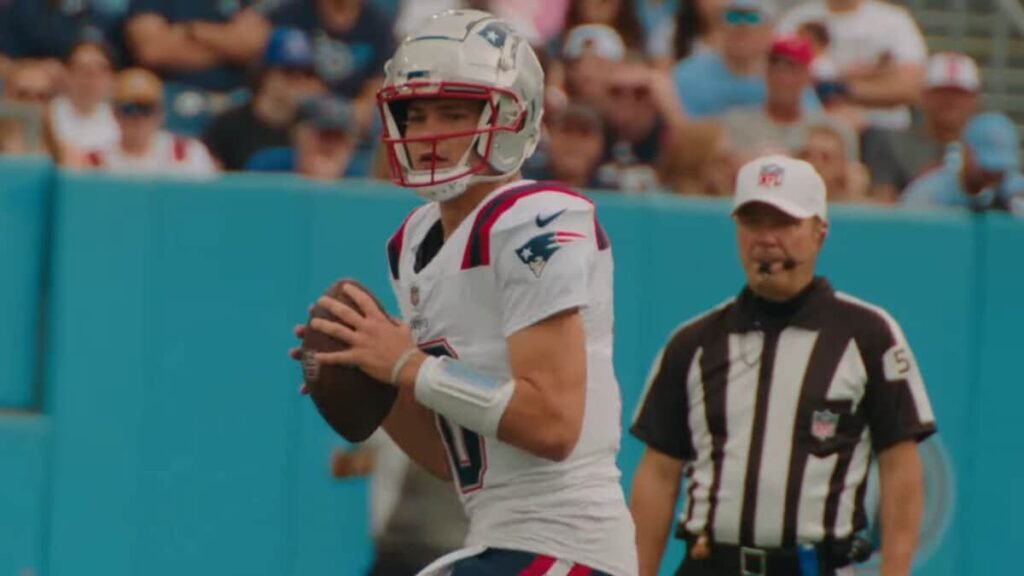
Polymarket has self-certified markets related to NFL player return dates ahead of the new football season. The CFTC has said that markets related to player injuries are prohibited, but has not opposed the self-certification.
Rather than focus on how long a player will be injured, the markets are framed as “Will {participant} participate in {event}?”
For example, “Will Patrick Mahomes participate in the Kansas City Chiefs’ Week 1 regular-season game?“
Mahomes is currently recovering from an ACL injury, which raises questions over whether the market could be construed as related to a player injury.
In its latest filings with the CFTC, Polymarket also said it plans to create markets on whether a player will start in a designated position. For example, “Will Josh Allen be the starting quarterback for the Buffalo Bills in Week 1 of the 2026 NFL regular season?”
CFTC Proposes Ban on Injury Markets
In its proposed rules for prediction markets, the CFTC noted that markets related to player injuries are contrary to the public interest and therefore prohibited.
“The Commission preliminarily believes that event contracts that explicitly settle solely by reference to the duration, severity, occurrence, or medical diagnosis of an injury sustained by a specific athlete raise serious public interest concerns,” the CFTC stated in its rules proposal.
It adds that such markets could “create perverse financial incentives that could encourage or facilitate physical harm to athletes.”
While Polymarket’s proposed markets do not explicitly focus on player injuries, if Allen or Mahomes were physically harmed, then this would affect the settlement. The “perverse financial incentives” could therefore be the same.
Bettors Seek Out Info on Player Injury Status
Gamblers already seek out inside information on player participation, which has led to several betting scandals. Former Lakers coach Damon Jones has pleaded guilty to sharing information about player injury status before it became public. Jones is one of many who have admitted to their roles in a wide-sweeping NBA betting and rigged-poker scandal.
Doctors and medical staff also say they frequently receive calls from bettors seeking information about injured players.
“People want an inside track,” said Dr. Timothy Kremchek, the head of medicine for the Cincinnati Reds, in comments to Sportico. “They’ll do anything to get to whoever they can to find out this information. If you knew a star player was going to be out, it gives you a tremendous advantage.”
In the Jones scandal, bettors wagered against the Lakers when they found out a high-profile player, such as LeBron James, would not play. In other scandals, bettors have wagered on the unders in player prop markets when they heard a player would exit the game early.
The markets on whether a player will participate could further incentivize gamblers to use underhanded methods of obtaining inside information. It also presents a temptation for players or those with insider knowledge to profit. Unlike point shaving, it also does not clearly damage the team if an injured player wagers that they will not play. Players do not need to manipulate their performance to ensure bets win.
Kalshi Already Offers Similar Markets
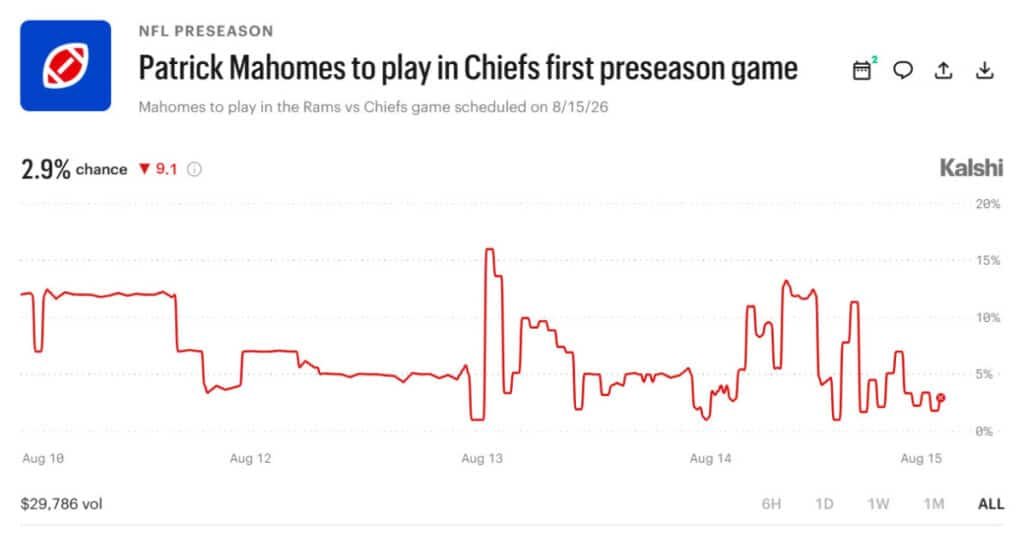
Kalshi already has a range of markets available on its platform related to whether injured players will play. For example, users could wager on whether Mahomes would play in the Chiefs’ first preseason game on August 15. A relatively small amount (just under $30,000) was traded on the market, with the chances reaching a high of 16% before resolving to no.
Additionally, users can effectively wager on when players will return from injury. For example, Kalshi offers a market on when Malik Nabers will next play for the New York Giants. Nabers is recovering from an ACL injury.
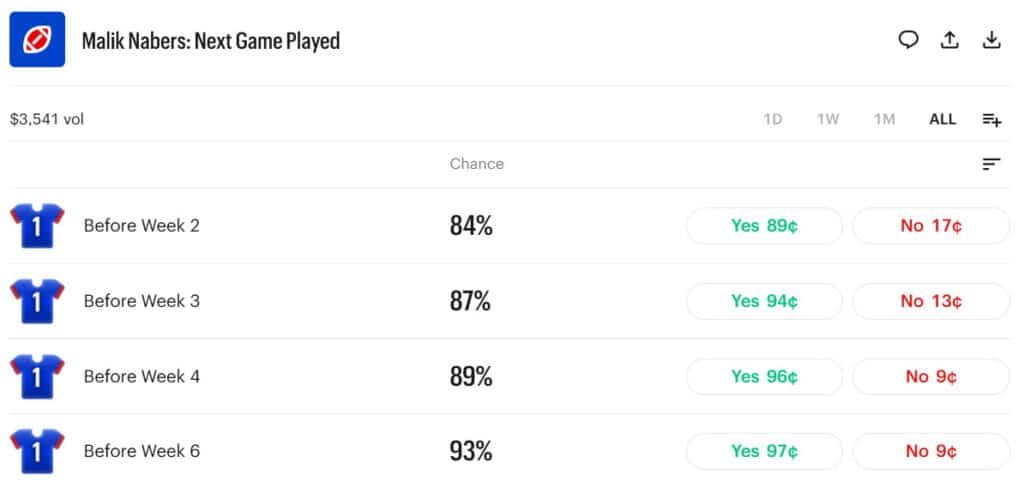
The market has not seen much trading volume, at just over $3,500. Similar markets also exist in other sports; for example, users can wager on when tennis player Carlos Alcaraz will next play a match. Alcaraz has been out for months with a wrist injury.
Markets A Viable Hedging Opportunity, Claims Lawyer
Markets on player participation can serve as a useful hedging opportunity for companies that will suffer financially when high-profile sports stars are unable to compete, claims gaming attorney Peter Hammon.
Kalshi also offered markets on whether Alcaraz or Jannik Sinner would play at the US Open. Sinner has now withdrawn with an injury, while Alcaraz looks like he will play.
“This is a genuine economic risk for the ticket resale market, corporate sponsors, and media rights holders, since these two are the biggest draws in men’s tennis,” Hammon wrote on LinkedIn.
He added, “There is no practical way to hedge this risk on sportsbooks. State gaming laws don’t allow this type of wager and even if it was allowed, it would be almost impossible for sportsbooks to manage the risk as the sole counter-party.”
Fellow lawyer Charles Farrell of Dentons pointed out the CFTC’s injury rule, which could result in this type of market being banned in prediction markets.
“I think how the contract is framed matters,” Farrell stated. “Ultimately, the CFTC would likely weigh the utility of the use case and the specific terms of the contract in determining whether it is contrary to the public interest.”
CFTC Reluctant to Regulate Markets
The CFTC has shown a strong reluctance to limit any markets on licensed platforms. Chief Executive Terry Duffy criticized the agency for failing to oppose any of the 25,000 self-certifications this year.
CFTC Chair Michael Selig, however, denied that platforms in the US are offering controversial markets that have caused insider trading scandals, such as wagering on Nicolas Maduro‘s exit as Venezuelan leader and markets on what Donald Trump will say in speeches. He called accusations that US platforms offer such markets “fake news”, despite their availability on Kalshi.
While self-certifying the NFL player participation markets, Polymarket also submitted a filing that will allow it to offer wagering on the next leader to exit their post.
A US soldier is under arrest for trading on the Maduro market, although this occurred on Polymarket’s international platform. The latest filing could allow the company to offer a similar market on its US site.
The CFTC has shown no indication that it will change its lax regulatory approach and oppose any of Polymarket’s latest filings.
The post Polymarket’s New Markets Involving NFL Player Availability Spark Debate appeared first on CasinoBeats.