Player props, multi-leg combos, point spreads, and over/unders. Open up an app offering all of that, and you’d be forgiven for thinking you’d landed in a sportsbook.
The thing is, these days, you may actually be looking at a federally regulated prediction market.
It’s a future Gene Johnson anticipated.
Back in March 2025, Johnson wrote a column warning that sports prediction markets wouldn’t stop at simple game-outcome contracts. He predicted that they’d move into player props and parlays until it became increasingly difficult to tell prediction markets and sportsbooks apart.
More than a year later, CasinoBeats spoke with Johnson in a wide-ranging interview and asked him to revisit that prediction in light of everything that had changed since.
Johnson now thinks even that prediction didn’t go far enough.
“It’s worse than that,” he said. “Eventually they’ll become indistinguishable from casinos.”
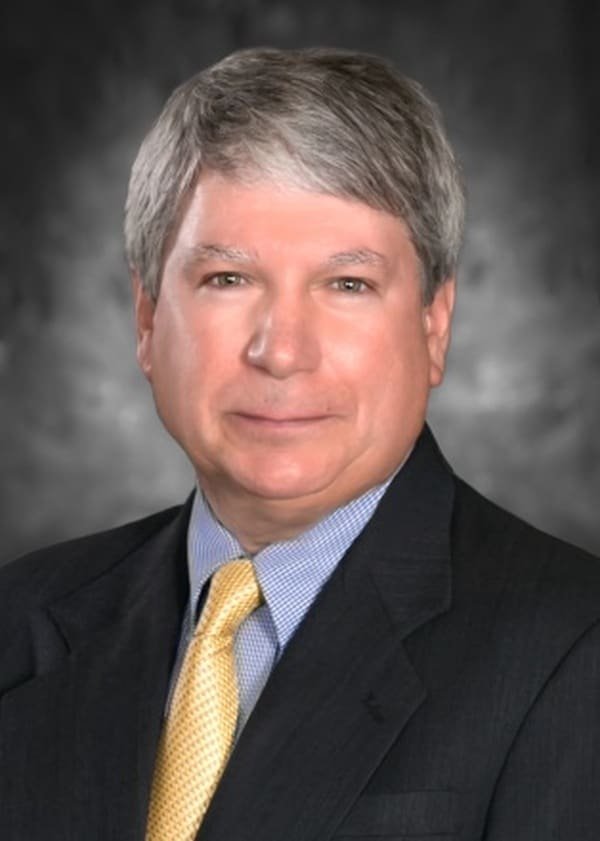
Johnson speaks from experience. He’s spent more than 30 years in the gaming industry, getting his start in Atlantic City casinos in 1989. He later founded EE Johnson Research and held senior roles at Spectrum Gaming Group and Gaming Knowledge Partners before co-founding Victor Strategies with Victor Rocha and Rob Miller in 2016. Today, he’s the firm’s executive vice president.
During our conversation with Johnson, he made it clear that he doesn’t view all prediction markets the same way.
Weather, elections, and mention markets are all fair game in his view. Sports betting and casino products are where he draws the line.
And when it comes to sports event contracts, Johnson’s verdict is unequivocal.
“This is the biggest scam that I’ve ever seen in my entire life, to put it mildly.”
Sports Prediction Markets Could Open the Door to Casino Games
Johnson isn’t alone in worrying that sports event contracts won’t be the last stop for prediction markets as they push further into the territory of state-regulated gambling.
A prediction market built around slots, blackjack, or roulette may sound far-fetched, but those types of casino games have already found their way into the conversation.
Commodity Futures Trading Commission Chair Michael Selig touched upon the issue during a February 12 interview on Bloomberg’s Odd Lots podcast when asked if prediction markets could offer contracts related to something like the spin of a roulette wheel.
“Some of these types of gaming, where it’s really a game of chance and not a game of skill, there’s definitely a difference,” Selig said. “It’s possible that you could construct some sort of contract, an esoteric derivative.”
The CFTC took up the issue in a proposed rule released in June, writing:
“The Commission preliminarily believes that event contracts involving games whose outcome depends on random chance—e.g., pure luck—are likely to be contrary to the public interest.”
When we asked Johnson about Selig’s comments, he was unconvinced.
“Sure, sure, sure. Yeah, I promise I’ll respect you in the morning,” he said.
Those concerns aren’t coming out of nowhere. During his confirmation hearing in November 2025, Selig repeatedly said he’d “look to the courts” to determine whether sports event contracts should be classified as gaming.
However, since taking office, the CFTC chair has directed the agency to intervene on behalf of federally regulated prediction markets in legal battles with states over sports event contracts.
Kalshi’s own history gives Johnson another reason for skepticism.
In a November 2024 brief filed with the D.C. Circuit, the company argued that “Congress did not want sports betting to be conducted on derivatives markets.”
However, by January 2025, Kalshi had launched sports event contracts nationwide.
“Kalshi was arguing for prediction election markets, and in those arguments, their attorneys said that they would never do sports betting because that’s gambling,” Johnson said. “As soon as it became convenient for them, they ignored that.”
That reversal is one reason he’s not all that confident that prediction markets will keep their word when they say casino games are off-limits.
If prediction markets are left to their own devices, Johnson thinks they could eventually become something even bigger.
“That’s where the existential part comes in. Conceivably, in the future, you could see nationwide crypto casinos [for people 18 and older] being run under prediction market logic,” he said.
The public has already gotten a glimpse of what prediction market trading could look like if packaged as a casino game. In June, Betr COO Alex Ursa built a slot-style interface using Kalshi’s API, saying it used “real transactions with a real account.” Kalshi quickly blocked his account, citing a violation of the company’s policies.
Johnson said Nevada Gaming Control Board Chair Mike Dreitzer had seen something similar at ICE Barcelona in January.
“He was demoed a five-reel slot machine running prediction market logic in the background.”
Johnson sees it as one example of how far the federal theory behind prediction markets could go.
“Under our existing federal upside-down world, you could put this machine in any convenience store anywhere in the U.S., and you could claim it was legal,” he said. “So it’s a threat to land-based gaming as well as online.”
His concern ultimately comes down to where that theory stops.
“If you can say that a sporting event or a sporting contest qualifies as an event with economic significance, what’s to stop you from saying that the turn of a card is not an event, that the fall of a slot reel is not an event?”
Prediction Markets Threaten State & Tribal Gaming Authority
In Johnson’s view, the stakes go well beyond competition between prediction markets and sportsbooks.
“Basically, this is an end run around regulated gaming,” he said. “This prediction market concept avoids taxes, including the federal excise tax. Avoids state regulation. It’s an affront to state sovereignty and tribal sovereignty as well.”
Johnson’s objection isn’t to sports event contracts themselves.
“I have no problem if Kalshi, for instance, wants to offer sports contracts in a state in the U.S.,” he told us. “That’s fine if they comply with the regulations, the taxes, the rules that are set up for other operators.”
What he objects to is companies offering gambling under a federal commodities regime without going through the state and tribal systems that oversee sportsbooks.
He compared the strategy that prediction markets are currently pursuing to the daily fantasy sports boom of 2015.
At the time, DraftKings and FanDuel flooded the airwaves with advertising and amassed huge customer bases before the Supreme Court struck down the Professional and Amateur Sports Protection Act in 2018.
Johnson thinks prediction markets are trying to do something similar.
“They can run with this as long as possible to become too big to fail, get it so ingrained in the business and the consciousness of the consumer that it’ll be impossible to extract,” he said.
Prediction markets are now available on DraftKings, FanDuel, and Fanatics.
Johnson sees the move as a return to their old playbook.
“It’s clear that DraftKings and FanDuel, in particular, went back to their disruptor origins,” he said.
DraftKings, for one, hasn’t been shy about explaining its strategy. In a March 2026 investor update, the company said Predictions “enables the Company to offer sports event contracts in states without regulated online wagering, expanding its reach to nearly the entire U.S. population.”
Utah is one example of how this is playing out on the ground. Sports betting is illegal in the state, but prediction markets offer sports event contracts there.
“You can walk into the Tabernacle in Salt Lake City, be 18 years old, and place a sports bet,” Johnson said.
While a federal judge recently ruled that Utah could enforce its anti-gambling laws against Kalshi, sports event contracts are still available to the state’s residents as Kalshi appeals the decision.
We asked Johnson about a letter former Sen. Christopher Dodd submitted to the CFTC in response to its proposed prediction-market rules. Dodd, who co-authored the Dodd-Frank Act, wrote:
“Congress was well aware of existing federal gaming laws when Dodd-Frank was passed and had no intention of amending those laws.”
Johnson connected Dodd’s point to his own experience with New Jersey’s fight to legalize sports betting.
“New Jersey spent five years litigating,” he said. “They had a referendum to allow sports betting, but they weren’t allowed to do that because of PASPA. The NFL sued the state to prevent sports betting. So how is it that no one discovered this magical property?”
The idea that sports betting was available through CFTC-regulated markets all along is, in Johnson’s words, “a canard.”
“It is one of the greatest lies that’s ever been told,” he said.
Johnson also sees prediction markets as a threat to tribal sovereignty. The Indian Gaming Association and the National Congress of American Indians are among the tribal organizations that have organized against sports event contracts.
“Indian gaming has been an engine of economic development for the tribes in the U.S. since the ’90s,” Johnson said. “It’s raised many of these tribes out of abject poverty and allowed their citizens to get college educations.
“It’s allowed them to preserve their language, their history, to actually practice sovereignty, both economically and politically,” he added.
“To lose that would be a real tragedy.”
Prediction Markets Play By Different Consumer Protection Rules
When Johnson got into the casino business more than three decades ago, there were only two places in the U.S. where casino gambling was legal: Nevada and Atlantic City.
He told us about just how much regulatory oversight came with working in the casino industry.
“You had to qualify for a key license, which was a tremendously invasive procedure,” he said. “Coming up through that industry, I understand how carefully regulated gambling is in the U.S. and the reasons why you want to protect consumers.”
Since they’re regulated at the federal level, prediction markets operate under a completely different set of rules than state-licensed sportsbooks.
Johnson acknowledged that Kalshi conducts some KYC checks, but said that prediction markets generally offer far fewer consumer protections than state-licensed sportsbooks are required to provide.
A comment a Kalshi attorney made at the National Council of Legislators from Gaming States conference in July 2025, while defending the federal model, really stuck with Johnson.
“People are adults, and they’re allowed to spend their money however they want, and if they lose their shirt, that’s on them,” the attorney said.
Johnson remembers the remark well.
“There’s no concern for the consumer here,” he said. “There’s no one to turn to if you are a victim of insider trading, or you think that the odds were not honest.”
Johnson is especially concerned about people vulnerable to gambling addiction.
“For some people, it’s an addiction, and with prediction markets, those people are not being protected. In fact, they’re being solicited.”
That concern extends to how the products are being marketed to younger users.
“They’re using underage influencers,” Johnson said. “They’re having people say that they’re going to pay for their college through betting on sports. This is not helpful.”
We also asked Johnson about an argument often made by prediction-market supporters: that exchanges are already federally regulated and expected to police their own markets.
“And how’s that working out?” Johnson responded.
“It’s like going back a few decades and asking the tobacco companies to regulate themselves,” he said. “Who’s protecting the consumer?
“They’re going to make decisions based on the bottom line, not on what is best for their customers.”
Johnson reserves some of his sharpest criticism for the CFTC itself.
“The CFTC is supposed to be the regulator of these companies,” he said. “Instead, it’s become a cheerleader and market advertiser.”
That criticism comes as the agency has repeatedly intervened in state disputes involving Kalshi and other prediction markets.
In July, the CFTC ordered Kalshi to fulfill open trades that a Michigan state court had directed the exchange to cancel.
When Kalshi notified the CFTC of a market emergency in August after New York sued the exchange, the agency ordered it to continue operating in accordance with federal derivatives law.
“Imagine you have a federal regulatory agency advising a company it’s supposed to regulate to ignore a court order,” he said.
Johnson borrowed a phrase Dreitzer used at the Oklahoma Indian Gaming Conference to describe the situation.
“We are now in the Upside Down,” Johnson said, referring to the Netflix hit Stranger Things.
“And that’s where we are — an alternate universe.”
Sports Prediction Markets Might Not Survive Supreme Court
It looks all but inevitable that the legal fight over sports prediction markets will end up in front of the Supreme Court, where three of the nine justices were appointed by President Donald Trump.
President Trump has publicly backed the prediction-market industry and the CFTC’s claim to exclusive federal authority, while Donald Trump Jr. is an adviser to Kalshi and an investor in Polymarket.
We asked Johnson whether a Supreme Court that many view as favorable to Trump could give prediction markets an advantage if the dispute eventually reaches the country’s highest court.
“Well, it’s impossible to say what the Supreme Court will decide. But I’m actually a Republican,” he said.
He’s not convinced that the makeup of the court will work in the prediction markets’ favor.
“If you look at conservative values, you will find that prediction markets are not in line with family values, with the traditional priorities of the Republican Party,” he said. “I think that would hold true to what is now considered the Republican Party.”
“But it’s Trump’s party,” he said. Still, Johnson doesn’t assume that will dictate how the justices answer the legal question.
“I think the conservative justices would look at this as illegal gambling. That’s just my personal opinion, but I don’t think it will survive the Supreme Court.”
We also asked Johnson what would happen if prediction markets won the legal fight and sports event contracts could be offered nationwide. Where does that leave the state-regulated gambling industry?
“I think they have to join the party,” he said. “There are a number of tribes that are looking at this. If this is legal, why aren’t we doing it?”
Johnson believes that commercial operators would eventually have to confront the same question.
“Were the Supreme Court to rule that this is a legal enterprise, I think you’d see all the major gaming operators, both tribal and commercial, working to get into the market.”
However, that’s not the future he expects.
“Gaming traditionally, and I’m speaking from a legal perspective, has been the purview of the states,” he said.
“You’ll see prediction markets stripped of sports betting contracts and any casino games, but doing quite well on their own with other predictions.”
In the end, Johnson’s beef isn’t with prediction markets themselves.
It’s with companies using them to profit from sports betting outside the state and tribal systems that regulate it.
“There’s nothing wrong with prediction markets,” Johnson told us. “Our effort is to take the gaming out of prediction markets.”
The post Victor Strategies EVP Gene Johnson: Prediction Markets ‘Biggest Scam I’ve Ever Seen’ appeared first on CasinoBeats.