Another year, another UK Budget, and gambling tax increases are back in the news again.
Chancellor John Healey opened the red briefcase for the first time under the new Prime Minister Andy Burnham’s cabinet.
The leadup to it saw the gambling sector form a lobbying campaign to protest a further tax increase, similar to the one last year – although Healey ended up delivering news far less ominous than what his predecessor, Rachel Reeves, did for the industry in 2025.
As expected, Machine Games Duty went up today from 20% to 25%, which is much lower than what pro-gambling tax proponents like the Social Market Foundation (SMF) wanted to see – a doubling to 40%.
The Office for Budget Responsibility (OBR) expects the tax raise to increase betting and gaming receipts by 31% to £5bn in 2026/27, though this is attributed largely to the increase in remote gaming taxes in the 2025 budget.
It then expects receipts to grow by an average of 3.4% a year to £6bn in 2031/32, while the new MGD rate is expected to bring in £100m a year from 2027/28.
When Reeves’ budget was announced, the OBR noted concerns that operators could take mitigation measures which would ultimately reduce revenue and tax returns.
However, the OBR has now actually reported “stronger-than-expected” remote gaming duty receipts, which it believes is indicative of “slower-than-expected reduction in activity” as a result of the RGD increase.
Nonetheless, with the Reeves tax burdens still reverberating throughout the industry, alongside inflating business and employment costs, operators in the UK will now need to absorb yet another tax increase that will further offset their toplines.
As expected, industry reactions to Healey’s budget were not late.
Entain expects immediate £25m hit
Entain, which owns Ladbrokes and Coral, expressed its ‘disappointment’ in the government’s decision, outright predicting detrimental impacts on the UK gambling sector as a whole.
According to the company, Healey’s new MGD will cost its UK and Ireland division something to the tune of £25m right off the bat.
Still, corporate management reassured stakeholders that Entain will be able to fully mitigate the impact of the latest tax hike in just over 24 months – by the end of 2028, with its FY26 guidance and forecasts of £500m annual adjusted cash flow for 2028 unchanged.
Stella David, Chief Executive of Entain, commented: “The previous gambling tax increases announced in November last year have already had detrimental consequences across the industry, with the effects being felt by employees, communities as well as customers.
“We will continue to work hard to limit the impact of these changes on our business, our people, and the communities in which we operate. Our priority is to protect jobs wherever possible whilst supporting a sustainable retail presence on UK high streets.”
High street devastation incoming
The Betting and Gaming Council (BGC), the UK’s biggest gambling trade body, also saw an inevitable negative impact on the British high streets, predicting a widespread “devastation” that will affect jobs and venues across the country.
Closures, the BGC added, will affect the North of England and Scotland, using market data by analyst firm EY that shows almost 9,000 people at-risk of job terminations and around 1,000 of betting shops and casinos facing closures as a result of the new 25% MGD rate.
Grainne Hurst, CEO of the BGC, added: “This is a deeply damaging decision and a blow to the thousands of workers, businesses and communities who depend on Britain’s regulated betting and gaming industry.
“For Britain’s casinos, the consequences will be significant. These are major employers and important contributors to local economies, yet this decision will force otherwise viable businesses to close and undermine investment before it can be delivered.
“Every betting shop or casino closure means lost livelihoods, more empty premises and another huge blow to our high streets. These venues will not simply be replaced, particularly in places already struggling to attract jobs and investment.
“The Chancellor has chosen a tax rise that will cost British jobs, close businesses and hollow out high streets, while handing an advantage to illegal operators. The Government cannot ignore the consequences of this decision.”
What about horse racing?
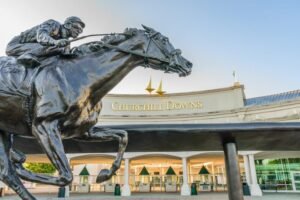
With betting shops at risk of closures, the news of an MGD rise was of course also met with worry from the British Horseracing Authority (BHA), given that horse racing relies on betting revenues to remain sustainable.
Still, while acknowledging that the new rates will impact racing, Brant Dunshea, CEO of the BHA, remained somewhat optimistic about the situation, noting that the worst case scenario of an MGD at 40% has been avoided, and seeing an opportunity for deeper engagement with the government.
He added: “While the MGD rate increase is not as severe as some called for, this change could still prove devastating for the future of our sport – impacting prize money, the viability of racecourses, thousands of jobs; and vital horse welfare projects and research.
“As the only sport in receipt of a statutory levy from the betting industry, we will seek to urgently engage with the Government to establish how we can work together to reduce the impacts of this tax policy.
“The BHA will also now analyse the Budget documents in greater detail to establish whether there are any other potential issues that may impact racing.”
Bingo’s break leads to heartbreak
The new MGD rates will also have a direct impact on social isolation and loneliness. This was the warning that the Bingo Association dished out to the government.
Bingo actually got a break in last year’s budget – the same one that saw Rachel Reeves increase Remote Gaming Duty to 40%. In contrast, the 10% Bingo Duty was scrapped entirely.
This year though, the sector has less to celebrate, although like betting shops, AGCs and casinos it can take some solace in the fact it escaped the worst case scenario of a doubling of all three rates of MGD.
According to the Bingo Association, a total of 77 clubs across the country will become loss-making, potentially meeting their end in the near future.
Clubs, the Association continued, help tackle the loneliness epidemic currently engrossing Great Britain, which it believes Healey has inadvertently worsened. The Bingo Association estimates that clubs in the Midlands and the North will be hit the hardest.