For UK gambling, Wednesday 1 April 2026 will be the most transformative and impactful date for all stakeholders. It is also one which will likely overshadow another hugely significant moment for the industry which occurred today.
Tomorrow, HM Treasury activates the increase in Remote Gaming Duty (RGD) from 21% to 40%. The hike is widely seen as the most consequential outcome of decades of regulatory changes brought by the Gambling Act review.
Today, another generational change occurred. As of today (31 March), GambleAware has ceased operations entirely, bringing to an end its 20-year existence.
Since 2018, GambleAware has served as the chief commissioning charity for the treatment, prevention and research of gambling harms.
April 2026… Grim times for everyone
From 1 April, operators will be forced to navigate the ice-thin margins of the “40% era”. The financial burden this will have on operators large and small has been widely discussed, and budget cutbacks are widely anticipated.
Meanwhile, British households are simultaneously bracing for rising energy bills, inflation and new pressures on interest rates. The British economy is already feeling the strains of a global economic fallout.
Against this backdrop, GambleAware closes its doors at a moment when demand for its services would be at a peak. The timing raises uncomfortable questions about how a new levy system has been designed as pressures intensify across all public circles.
The charity’s exit also exposes uncertainty around the implementation of the new statutory levy, placed under the stewardship of NHS England, the Office for Health Improvement and Disparities (OHID) and UK Research and Innovation (UKRI), with oversight from DCMS.
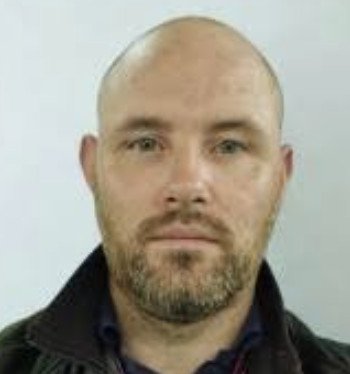
Jordan Lea, founder of Deal Me Out, described the organisation as foundational to the UK’s harm reduction ecosystem: “GambleAware has been a goliath within research, education and treatment – not simply as a commissioner, but as a visionary.
“Its closure, alongside that of other services to come, risks triggering a sector-wide brain drain that, if not carefully managed, will harm the most vulnerable service users. OHID and the NHS must now turn years of debate into decisive action – with the eyes of the sector firmly upon them.
“Time will tell whether these decisions prove correct.”
Stakeholders remain unconvinced that the new framework can immediately replicate the coordination and commissioning capacity GambleAware built over two decades.
Many choose to view the closure and neglect of GambleAware in a new system tackling harms as completely political and with no consequence given to impacts.
The charity was also an easy target for media and politicians to criticise, with scrutiny focusing largely on its “direct funding from UK gambling”. Its development of the National Gambling Support Network (NGSN) was often overlooked.
Going through changes
The transition from GambleAware’s funding model to the new tripartite model of NHS England, OHID and UKRI has also been far from smooth. The government has had to make three-month grants available to support charities during this period.
Some charities, like the Gambling Lived Experience Network (GLEN), have been vocal in criticizing what they believe are the shortcomings of the new model, even if it is in its own early stages.
Others have had to cut flagship programmes. This afternoon, Gamban announced that it was taking the unprecedented step of shutting down the TalkBankStop programme, a joint initiative between itself, GamCare and GamStop.
The service was created in 2020, and allowed users to block themselves from both regulated and non-regulated gambling apps and websites, exclude from all UK gambling sites for six months or more, and receive free confidential support sessions.
Gamban stated that the closure was a direct result of OHID determining that it would no longer receive any funding due to being a limited company. The firm will now operate on a subscription basis in England and Scotland, but its services will still be free in Wales.
Early signs suggest that GambleAware, which was a long-time proponent of a statutory levy to replace the voluntary donations system but with the idea of itself retaining the role of commissioner, is not the only casualty of the funding model transition.
Politically naive
As mentioned above, GambleAware was an easy target for political and media criticism, with some advocates for sector reform believing it was too closely aligned to the industry due to the aforementioned funding model.
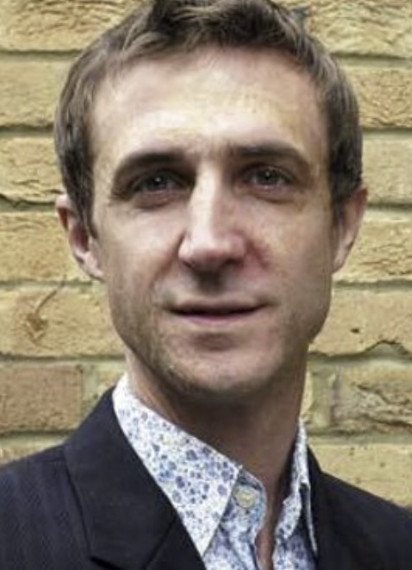
However, some believe that it did not always help itself. Writing in the Player Protection Hub, Editor Steve Hoare argues that the charity’s final chapter was shaped as much by its own positioning as by external pressure.
At a critical juncture, GambleAware had “adopted the prohibitionist rhetoric of anti-gambling campaigners and lobbied itself out of existence”.
Despite lobbying to become the central commissioning body under the statutory levy, GambleAware ultimately found itself isolated — caught between government reform, an emboldened public health lobby, and long-standing hostility from campaign groups.
Its ambitions were undone not only by political momentum, but by a failure to reconcile fundamentally opposing visions of how gambling policy should develop. Hoare believes this has left behind a conflicting legacy of both institutional achievement and strategic missteps.
“The closure of GambleAware is, in many ways, a scandal shaped by misinformation and misjudgement,” he said. “The transition to the statutory levy may yet be repaired, but much of this disruption could have been avoided with greater restraint from all sides.”
Legacy of mixed emotions
Prior to its shutdown, GambleAware published its final “legacy report”, commissioned from New Philanthropy Capital (NPC). It was intended that the report would provide guidance and continuity for the incoming statutory levy system.
The report highlights the scale of the charity’s achievements. At its peak, more than 110,000 individuals were supported through the National Gambling Support Network (NGSN), launched in 2023, with 93% of those completing treatment reporting improved outcomes.
GambleAware’s tenure leaves behind a system that reshaped how gambling harms are addressed in the UK — embedding a public health framework, expanding national treatment access, and integrating lived experience into research and service design.
Central to this was the NGSN itself: a coordinated network of 22 partner organisations delivering free treatment across Great Britain.
There is, therefore, much to acknowledge. But the closure also invites reflection on what was lost and whether the outcome was inevitable.

Observing from the sidelines, Dan Waugh, Partner at Regulus Partners, offers a measured but cautionary assessment: “GambleAware established a strong reputation for robust and effective treatment commissioning. Ensuring continuity in this area is important.
“At times, however, the charity appeared more focused on PR and lobbying than on evidence-based harm prevention. By the end, it had lost the trust of a wide range of stakeholder groups.”
Like others, Waugh recognises that a new framework carries its own risks: “The outlook for research, prevention and treatment is concerning. The levy was justified by perceived conflicts of interest and concerns over funding stability.
“What has emerged is a system potentially exposed to new conflicts — and the risk of destabilising established providers.
“There are also concerns that research priorities may be shaped by ideology rather than evidence. If policy direction ultimately suppresses participation in the regulated market, the levy itself could be undermined—given that its funding is derived from that very activity.”
As such, GambleAware exists as both the principal architect of the levy system and its most visible casualty. There is little doubt that the charity is the greatest victim of a decade of politicised gambling reform.