During a period rife with integrity concerns across professional sports, prediction markets have ramped up safeguards to defend against market manipulation.
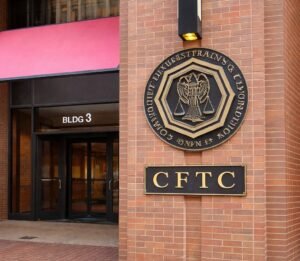
Earlier this week, the NFL became the latest league to engage with the Commodity Futures Trading Commission in establishing protections for trades that can be easily manipulated. In a letter sent to the CFTC 29 March, the league urged top prediction market operators to avoid listing “inherently objectionable” trades on officiating, injuries and other contracts susceptible to manipulation.
Last November, the NFL disseminated a memo to all 32 club owners that it began working with state regulators to limit and potentially “prohibit” prop bets on the sport. Weeks later, Jeff Miller, a vice president for the NFL, told Congress that the league had no plans to participate in prediction markets due in part to the “possible impact on the integrity” of sporting events.
However, Miller pivoted earlier this year as other leagues began exploring commercial deals with operators. Days before the Super Bowl in February, Miller described event contracts as “innovative”, while cautioning that he was unsure on the regulatory landscape for the markets.
CFTC plans to reject injury-related contracts
The NFL, according to Miller, has spent months in discussions with the CFTC outlining certain trades it views as objectionable. One type, involving contracts related to player injury, will likely be prohibited, CFTC Chairman Michael Selig noted. The agency is focused on high-risk contracts where a player can earn funds from a contract for injuring an opponent, he indicated.
If the league flags the contract as objectionable and the CFTC has basis to be concerned on the vulnerabilities of manipulation, the agency will reject the contract, he explained.
“The CFTC takes seriously its responsibility to reject prediction market contracts that are readily susceptible to manipulation and we’re working with the professional sports leagues to ensure we get this right,” Selig told ESPN.
The NFL suspended former New Orleans Saints coach Sean Payton for the entire 2012 season after the league ruled that the Saints established a slush fund for paying players to injure certain opponents. Nearly 30 Saints players took part in the bounty program, the NFL said.
Separately, David Miller, director of enforcement for the CFTC, suggested that violators of insider trading regulations on prediction markets could face prosecution. During the Super Bowl, suspicions arose on trades involving Bad Bunny’s opening song and whether Amazon founder Jeff Bezos would attend the game.
“A myth has spread that insider trading is permissible [as] prominent individuals in finance have contended that insider trading law does not apply to these markets,” the CFTC’s Miller said. “These comments all suggest that insider trading is an important and acceptable part of the prediction market ecosystem — not so.”
Tribes stage battle vs. prediction markets at IGA
Days before the Final Four, a contingent of tribal leaders staged a full-court press against prediction markets at a prominent conference in San Diego.
As expected, the tribes’ intense battle against prediction markets took center stage at the 2026 Indian Gaming Tradeshow and Convention. The nation’s largest tribal gambling conference was held amid increasing calls from tribal operators for a blanket prohibition on sports event contracts.
The conference opened 30 March with four sessions on prediction markets. IGA Conference Chair Victor Rocha designed the block to educate participating tribes on what he described as an “existential threat” to tribal gaming. The afternoon concluded with a panel entitled “Prediction Markets: Building The Coalition for the Fight Ahead”. The panel featured appearances from IGA Chairman David Bean and James Siva, chairman of the California Nations Indian Gaming Association.
Bean noted that public opinion on the complex subject will likely take a backseat to legal rulings on prediction markets. When asked by iGB on whether the Supreme Court will take up the case before the 2028 US presidential election, Bean said he believes there is a “strong likelihood.”
While Bean acknowledged that Kalshi scored early legal victories last year, he believes the “tide started turning” when questions related to the Indian Gaming Regulatory Act were examined by various courts. The longstanding battle, in his view, shifted once tribal entities began mobilising efforts to defend their sovereignty.
“I feel really strongly that we will prevail,” he told iGB.
Bean also appeared at a separate press conference with Siva on prediction markets 1 April. All told, IGA hosted more than a half-dozen sessions on the topic during the week.
“This is about fairness, this is about protecting our industry,” Bean said. “We will not allow federal agencies to ignore our laws.”
CFTC files first prediction market suit vs. states
The conference ended 2 April, the same day the federal derivatives regulator filed lawsuits against three states aimed at challenging their recent actions against CFTC-registered designated contract markets (DCMs).
The CFTC’s litigation against Illinois, Arizona and Connecticut contends that the federal agency has exclusive jurisdiction to regulate event contracts under the Commodity Exchange Act. While more than a dozen states have lodged legal challenges against Kalshi over the last year, the lawsuits represent the first by the CFTC to block state gaming regulators from policing operators of prediction markets.
“This is not the first time states have tried to impose inconsistent and contrary obligations on market participants, but Congress specifically rejected such a fragmented patchwork of state regulations because it resulted in poorer consumer protection and increased risk of fraud and manipulation,” Selig wrote in a statement.
In a 29-page lawsuit, the federal agency referenced a series of cease and desist letters the Illinois Gaming Board issued to three CFTC-registered DCMs under the Illinois Sports Wagering Act. The respondents “misapprehend” the nature of the contracts and the corresponding federal regulatory framework, according to the CFTC.
“Even without the express language of the CEA preempting state regulation, any state interference in DCM regulation is preempted because Congress “occupied the field” via the CEA and the CFTC,” the agency wrote.
One of four attorneys who represents the Justice Department is Yaakov M. Roth, a principal deputy attorney general. Roth previously represented prediction markets in Kalshi vs. CFTC, a 2024 federal case on election betting. At the IGA conference, Rocha described Roth’s presence on the case as a “blatant conflict of interest”. Senator Richard Blumental (D – Connecticut), meanwhile, criticised Selig for intervening in lawsuits against prediction markets.
“He’s shown himself a crony of Kalshi, using the CFTC to bully states on their behalf,” Blumenthal wrote.

Matt Rybaltowski
Matt is primarily responsible for long-form feature coverage on complex sports betting scandals. He also provides coverage on finance, M&A and other technological developments.