
Global markets rebounded last week on hopes of de-escalation in the Iran war. The Roundhill Sports Betting & iGaming ETF, which invests in a basket of gaming companies, rose by 3.4% last week, which was broadly in line with the S&P 500 Index.
Playtech Plc and DraftKings were among the major gainers in the holiday-shortened week, while Bally’s Corporation and The Star Entertainment Group were among the major losers.
Major Gainers
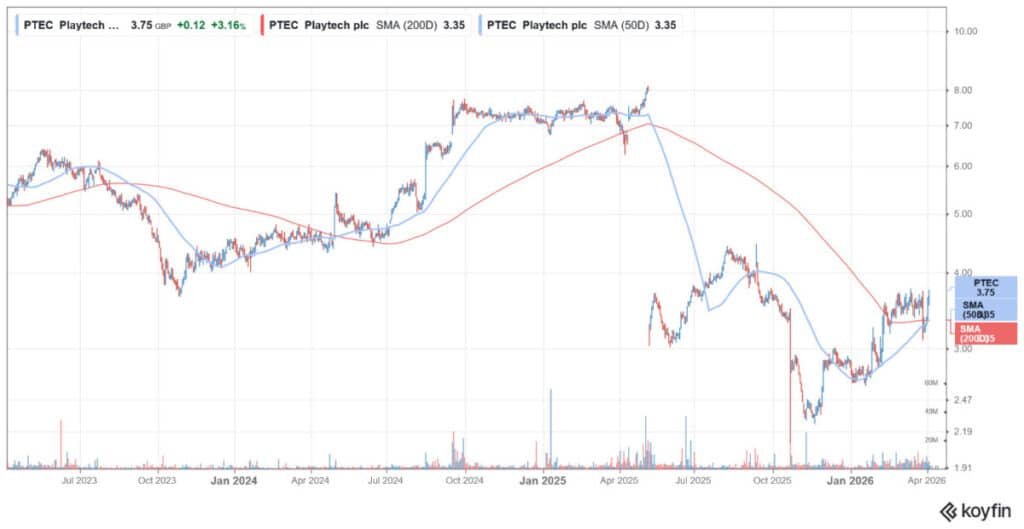
Playtech Plc (LSE: PTEC) +19.24%
With gains of nearly 20%, Playtech Plc was by far the biggest gainer in the coverage of gaming stocks. The stock has extended its year-to-date gains to an impressive 32% despite the turmoil in broader markets.
There was no major market-moving news about the company last week, aside from its announcement that it had repurchased over 1.4 million shares as of April 2 as part of its share buyback program, announced late last month.
The preceding week, the company released its Q4 earnings, raising its 2026 adjusted EBITDA guidance to at least €195 million, significantly above the analyst consensus of €177 million.
Investors were encouraged by the exceptional performance in North America, where revenue in the US and Canada grew by 126%. Playtech management reassured investors that its growth in the Americas (Mexico and the US) and other regulated markets would mitigate the impact of the UK tax increases.
DraftKings (NYSE: DKNG) +8.89%
DraftKings stock, which has been sliding for much of this year, reversed course and gained almost 9% last week, which helped it narrow its YTD losses to around 33%. The rise looks like a technical rebound as the stock was looking oversold on the charts after the massive drawdown.
If anything, the news flow around DKNG stock was slightly negative during the week, as Interactive Games LLC, an affiliate of Cantor Fitzgerald, sued the company and FanDuel, alleging that the companies infringed Cantor Gaming’s patents.
Analysts also continued to trim DKNG’s target price, and last week Susquehanna lowered its price target from $33 to $32 while Citizens JMP lowered its from $38 to $34.
However, Citizens JMP analyst Jordan Bender sees a ray of light, and in his note, he said that March Madness “appeared to be a neutral event from a game outcome perspective, indicating overall gaming margins could be a slight tailwind for the quarter.”
The firm adjusted DraftKings’ 2026 EBITDA forecast to around $154 million after accounting for the launch of sports betting in Arkansas, which wasn’t included in the previous forecast.
Huya Inc (NYSE: HUYA) +8.60%
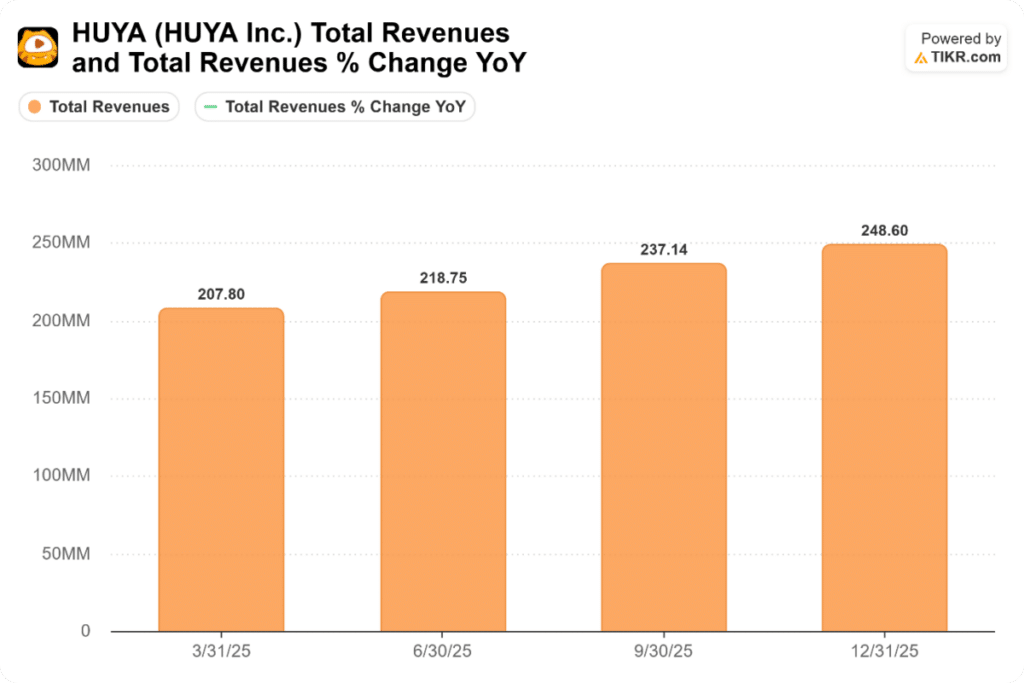
With gains of 8.6%, Huya also made it to last week’s top gainers. There wasn’t any major news from the company last week, and the gains came amid the rally in broader markets. Notably, the stock had crashed following the release of Q4 earnings last month, which showed a net loss of $16.8 million.
However, while Huya has been posting losses, it held $546 million as cash and cash equivalents on its balance sheet at the end of 2025. During the earnings call, the company announced a special dividend of $0.135 per share and a new $50 million share buyback plan.
Biggest Losers
Bally’s Corporation (NYSE: BALY) -14.68%
Bally’s Corporation fell nearly 15% last week and was the biggest loser in our coverage of gaming stocks for the second consecutive week. The stock is now down over 41% for the year and ranks among the worst-performing gaming stocks.
Last week, Stifel Nicholas lowered the stock’s target price from $18 to $12, which weighed on sentiment. The brokerage updated Bally’s 2026 and 2027 earnings estimates, and its forecast now lies below Street estimates. Analyst Jeffrey Stantial also expressed concern about the company’s financing risk.
Bally’s has faced several such target price cuts this year, and the previous week, Truist lowered the stock’s target price from $18 to $13, citing “limited liquidity and elevated leverage,” further dampening sentiment.
Notably, Bally’s already has a bloated debt pile, and investors are worried the company may need to raise more equity capital or take on even more expensive debt to finance its Chicago resort and Bronx casino.
Despite management touting a turnaround after selling international assets to Intralot, the market remains wary of the sale-leaseback strategy used to fund construction. Selling the land under its casinos provides immediate cash but creates long-term rent obligations that pressure future margins.
The Star Entertainment Group (ASX: SGR) –8.0%
The Star Entertainment Group also continued its dismal run, falling 8% last week and extending its YTD drawdown to 41%. Last week, the company officially completed the sale of its 50% stake in the Queen’s Wharf Brisbane project to its partners, Chow Tai Fook and Far East Consortium.
While the deal wipes out Australian (AUD) 1.4 billion in debt associated with the project, it also drastically reduces SGR’s future income. Instead of a share of profits, The Star will now receive a fixed management fee of AUD 18 million per year, which is significantly lower than previous estimates and is subject to performance-based clauses that allow the new owners to terminate the agreement with 90 days’ notice.
Meanwhile, last week Star announced a binding commitment for AUD 550 million in refinancing, marking a significant step in its strategic turnaround plan.
Playtika Holdings (NYSE: PLTK) -7.43%
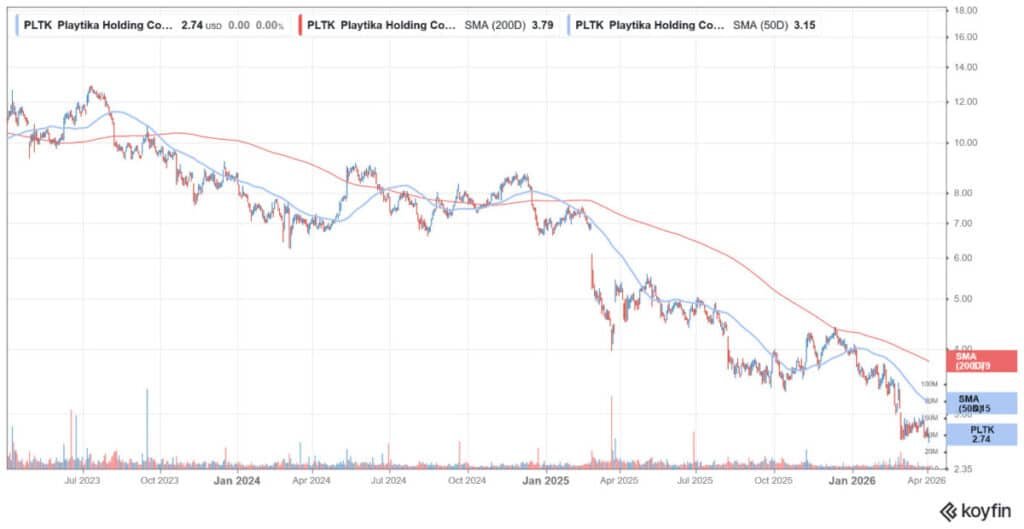
Playtika Holdings stock also fell over 7% last week. The stock has been sliding since it reported Q4 earnings in late February. Playtika reported revenues of $678.8 million, which was up 4.4% YoY. However, its net loss ballooned to $309.3 million due to a non-cash impact from the remeasurement of contingent consideration related to the earnout payment tied to the SuperPlay acquisition. Amid its financial woes, the company also suspended its quarterly dividend.
Wall Street analysts have also been gradually lowering their target prices on Playtika as the company continues to report dismal numbers.
Major Gaming Market Developments
In a major development, the Commodity Futures Trading Commission (CFTC) sued Connecticut, Arizona, and Illinois. These states had issued “cease and desist” orders to platforms like Kalshi and Polymarket, claiming they constitute illegal gambling.
“The CFTC will continue to safeguard its exclusive regulatory authority over these markets and defend market participants against overzealous state regulators,” said CFTC Chairman Michael S. Selig.
Internationally, Gibraltar granted its first-ever prediction market license to Predict Street, raising hopes that more jurisdictions in Europe might formalize the burgeoning industry.
La Liga North America has officially teamed up with Polymarket, launching new partnerships across the United States and Canada which is a first of its kind deal for a European soccer league.
Data released by the Gaming Inspection and Coordination Bureau (DICJ) last week showed that Macau’s Gross Gaming Revenue (GGR) for March 2026 reached MOP 22.61 billion (approximately US $2.82 billion).
This figure reflects a strong recovery and a significant seasonal rebound following the post-Lunar New Year lull in February.
Looking ahead, investors will be closely watching regulatory developments in the prediction market space in the coming weeks, as the CFTC battles states for regulatory oversight.
We don’t have any major earnings lined up for this week, but the Iran war is something gaming investors will be closely watching, as any escalation might fuel a broader market meltdown.
The post Gaming Stocks Rebounded Last Week: Will Rally Continue Amid Middle East War? appeared first on CasinoBeats.