Governor reiterates call for ‘centralized regulatory authority’ to oversee all Virginia gambling
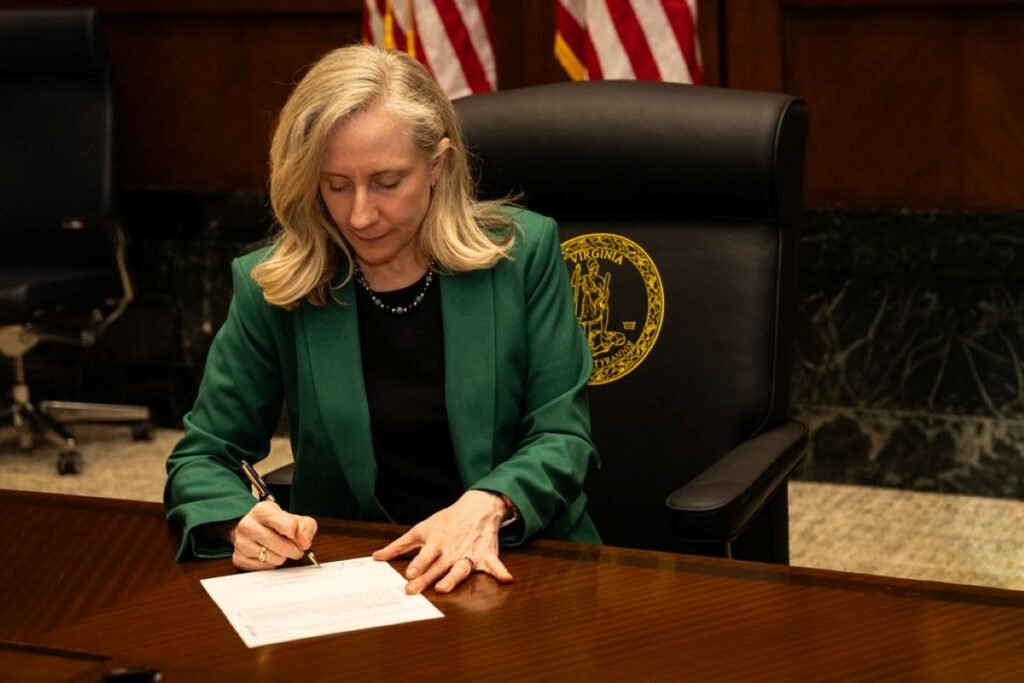
Virginia Gov. Abigail Spanberger vetoed a bill Friday to legalize skill games in the Old Dominion, her second such action in as many days against a controversial gambling measure.
In rejecting Senate Bill 661 (the skill games measure) Friday and Senate Bill 756 (a bill establishing a casino in Fairfax County) Thursday, the Democratic governor, who took office less than three months ago, called for the creation of a single entity to oversee all aspects of gambling in Virginia.
The absence of a centralized regulatory authority for gaming creates gaps in oversight that threaten the Commonwealth of Virginia’s ability to provide consistent enforcement, prevent illicit activity, and protect all consumers,” she said in a statement. “Right now, legalizing skill gaming and introducing more of these machines into our communities would strain an already fragmented system.”
Currently, Virginia allows a state lottery, sports betting, casino gaming, horse racing, and historical horse racing.
Lengthy Battle Over Skill Games in Virginia
Virginia’s history with skill games, also known as gray machines, is rather complex. The state initially allowed the games for a short time to generate revenue during the COVID-19 pandemic. Lawmakers voted in 2021 to ban the slot-like machines that appeared in bars, convenience stores, and other businesses across the commonwealth.
Shortly after the law took effect, skill games manufacturers and businesses hosting the machines won a court ruling blocking the state from enforcing it. The legal battle continued until the state’s supreme court overturned the lower court’s ruling and reinstituted the ban in 2023.
SB 661 called for the Virginia Lottery Board to allow up to 25,000 machines statewide. A fiscal note published Tuesday by the Department of Planning and Budget said the lottery does not know how many machines are currently available for play.
Some estimates, the note added, put the number of machines at about 90,000.
Spanberger Concerned About Disproportionate Impact
The bill also established a 25% tax on gross profits. Of that, the state’s general fund would have received 75% of the revenue, with the city or county where the machine is located getting 15%. The remainder would have been allocated to problem gambling treatment, gambling law enforcement, and administrative costs for lottery officials to oversee the machines.
If the lottery approved 25,000 machines, the SB 661 note projected the tax to generate $346.8 million annually, based on each machine producing an average of $152 in revenue daily.
Besides citing the lack of a central gambling regulator in the state, Spanberger also said the data from when the state temporarily allowed 9,000 machines to operate during the pandemic showed a disparity in where operators placed their games.
The data clearly show that devices were disproportionately located in communities where higher percentages of the population live below the poverty line, communities with lower rates of educational attainment, and communities where higher percentages of the population are Black and Hispanic,” she said in the veto statement. “The data enumerate the millions of dollars in wagers made resulting in millions of dollars flowing out of these communities, but without an entity in place to evaluate and mitigate social, economic, and public impacts, the Commonwealth is not positioned to expand gaming and legalize electronic skill gaming devices.”
Former Gov. Glenn Youngkin, Spanberger’s predecessor, also vetoed a similar bill in 2024 that would have legalized the machines.
NoVA Casino a No-Go Without Local Support
Spanberger vetoed SB756 on Thursday. In her statement on that bill, she pointed out that Fairfax County leaders opposed a casino resort in Virginia’s most populous county. More than 1.1 million people reside in the Northern Virginia county located across the Potomac River from Washington, D.C.
The measure also would have prevented a public referendum for Fairfax County voters to approve a casino in Tysons Corner, a suburban Beltway community located between D.C. and Dulles International Airport.
In no other circumstance has the General Assembly prescribed specifications for a casino’s location,” the governor said in announcing the veto. “This effectively precludes local input and eliminates local decisions. While this legislation specifically affects only Fairfax County, it would set a precedent to bring casino referendums to other localities where the local governing board may similarly oppose such an effort.”
Virginia already has casinos in Bristol (Hard Rock), Danville (Caesars), Norfolk (Boyd/Pamunkey), Petersburg (Cordish), and Portsmouth (Rivers). Petersburg received a chance for its casino in 2024 after voters in Richmond defeated two referendums for one.
Lawmakers Get Chance to Override Governor
While Spanberger rejected signing the bills, lawmakers will receive an opportunity to override her vetoes on the two Virginia gambling measures.
The General Assembly returns to Richmond on April 22 for its reconvened session. That is when lawmakers in the state House and Senate will take up Spanberger’s vetoes as well as any recommendations she made on other bills.
Two-thirds of the state lawmakers present in each chamber must agree to override a veto.
Last month, a conference committee of House and Senate members reached an agreement on a final version of SB 661. The House approved the bill by a 57-38 vote on March 14. That same day, the Senate voted 23-15 to send the bill to the governor.
Another conference committee also reached an agreement on SB 756. The House voted 55-41 for the bill on March 14, and two days later, the Senate concurred with a 25-13 vote.
The post Virginia Gov. Spanberger Vetoes Bills Legalizing Skill Games, Approving Fairfax County Casino appeared first on Gambling Insider.