Macau casino operator Wynn Macau Ltd might see “low-single-digit” year-on-year increase in its 2026 top line and its earnings before interest, taxation, depreciation and amortisation (EBITDA), though without “significant debt reduction”, said research house CreditSights Inc.
The institution noted the Macau unit’s capital expenditure “appetite” remains “high” for 2026, adding that such appetite was “expected to increase following the company’s recently-announced new US$900 million to US$950 million all-suite luxury hotel project, The Enclave”.
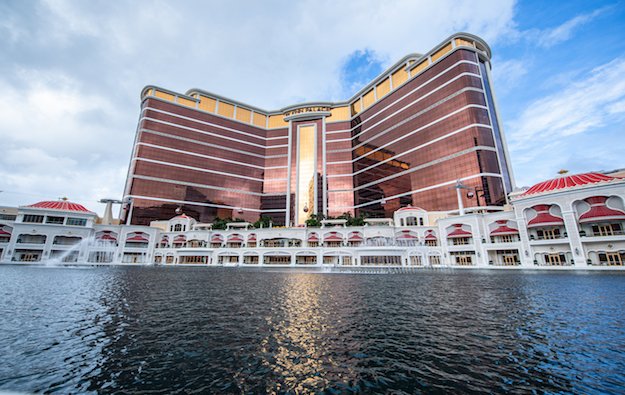
On the first-quarter earnings call of the United States-based parent Wynn Resorts Ltd on Thursday, there was news of an up-to US$950-million new hotel tower for the group’s Wynn Palace property in the Cotai district of Macau, with construction likely to start in the second half this year.
The name mentioned for the 432-suite facility was “The Enclave at Wynn Palace”. The firm also runs the Wynn Macau property in downtown Macau.
As of March 31, Wynn Macau Ltd’s long-term debt stood at just over US$5.85 billion, and it held US$95.7 million in restricted cash. That is according to the first-quarter results filing of the parent.
CreditSights analysts Nicholas Chen and David Bussey stated in a memo on the Macau unit, after the earnings call, that “the company expects capex [outlay] on the recently-announced The Enclave project to be limited to piling and early development works in 2026.”
But the institution noted the Macau unit’s existing capital commitments for 2026 were “almost double” 2025’s, at US$400-million to US$450-million, “along with” US$70-million to US$80-million of maintenance spending.
CreditSights stated, commenting on the underlying trends in the Macau business that will help service its capital outlay: “For fiscal year 2026, we still project a low-single-digit year-on-year-increase in the company’s overall top line, based on an assumed low-single-digit year-on-year-increase in the overall market GGR [gross gaming revenue] and steady market share.”
Vitaly Umansky, senior analyst at Seaport Research Partners said in a Friday memo that Wynn Macau Ltd’s first-quarter GGR share had been “as expected, 13.8 percent, with strong mass play,” that was “better than the market” overall.
CreditSights observed: “While management acknowledged the competitive environment, as premium demand continues to drive the Macau gaming market, the company aims to stay disciplined with its reinvestment.
“As such, we anticipate margins to remain steady, and for EBITDA to grow by a low-single-digit year-on-year in 2026.”
The Macau unit’s free cash flow was likely “to remain positive, albeit weaker year-on-year due to the higher expected capex,” added the institution.
But CreditSights further noted: “For 2026, we do not envisage significant debt reduction by Wynn Macau [Ltd], as the company has no debt maturing in 2026 with its next debt instrument due being the US$750-million, 5.5-percent bond maturing in October 2027.
“As such, any improvement to its leverage is likely to be only marginal from the incremental EBITDAR [EBITDA plus rental and other costs],” the credit research house added.
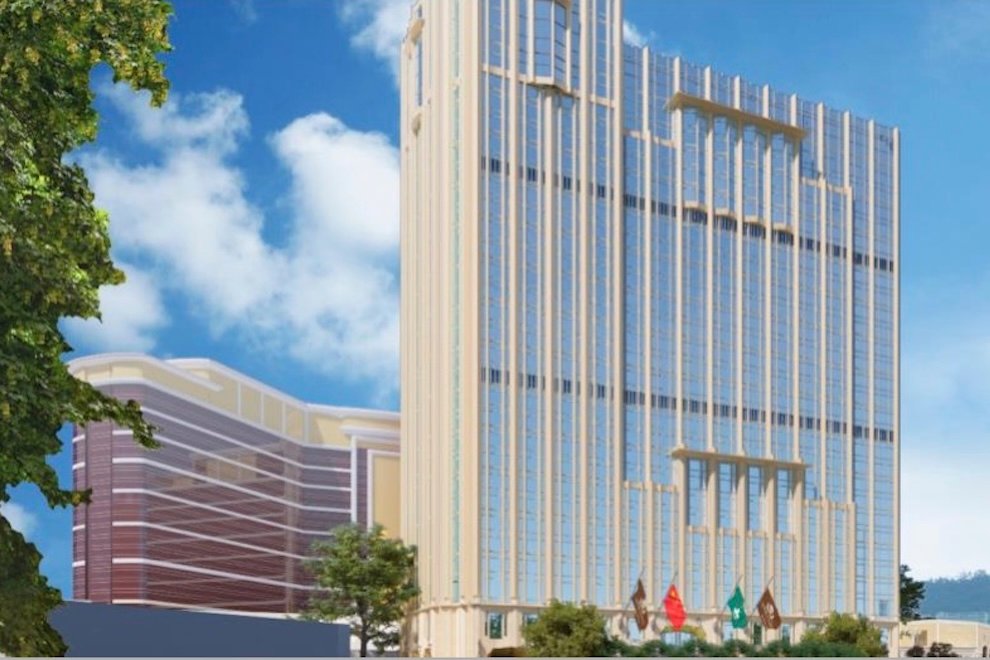
Seaport stated that while the new Cotai hotel tower (pictured above, in an artist’s rendering), would result in “increasing capex over the next few years”, the project would likely to be funded with the casino operator’s “operating cash flow” and “potentially liquidity from the Macau credit facility”.
Mr Umansky added: “Management estimates that Enclave can drive an incremental US$150-million to US$175-million of EBITDA: a return-on-investment in the high teens percentage.
“There is no fear of cannibalisation – as may have happened with some other Macau properties that have seen expanded hotel capacity,” he stated.
“The key for Wynn will be to remain an operator of choice for the luxury end of the market in light of increased competition in the market.
Seaport added: “This will be Wynn’s biggest challenge as other operators improve product quality and service offerings, but it has shown its ability to do so in the past and should continue to be able to effectively compete for high-end business.”