In the attention economy, iGaming operators have seconds rather than minutes to make the right impression.
To illustrate the challenge, research has found that an average adult checks their mobile or cell phone 144 times per day.
In this context, operators have to cut through the clutter of modern life and engage and retain individuals among the plethora of entertainment offerings at their fingertips.
Moreover, even if playing games is front of mind, competition for attention is fierce.
The most recently available figures on online slots in a leading market like the UK, for example, found that the average number of active accounts and total number of spins had increased by 5% and 7% respectively to record levels by the end of 2025.
The rise of ‘instant’ games
Increasingly, individuals are less inclined to wait to be entertained – and if their expectations are not met, they will look elsewhere in an instant.
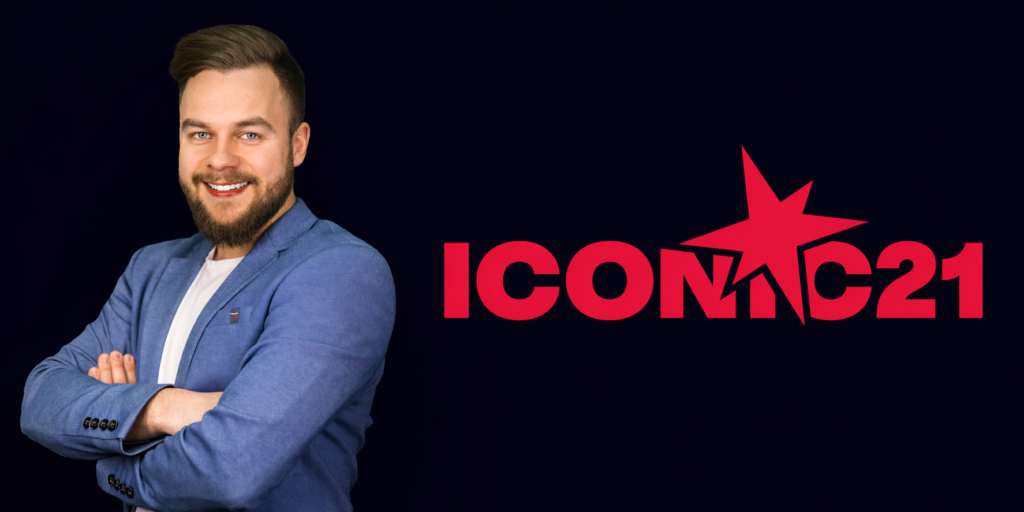
The implications for operators worldwide are clear, according to Edvardas Sadovskis, chief product officer at iGaming content provider ICONIC21.
“Let’s be honest: the days of players sitting through long, cinematic slot intros are fading,” Sadovskis says. “We’re living in a world of quick scrolls and ‘snackable’ entertainment. If a game doesn’t grab someone in the first three seconds, they’ve already moved on.
“For the operator, this is a change in how the lobby needs to feel. We’re seeing a massive move toward ‘instant’ games. These are the complete opposite of the complex, math-heavy games of a decade ago. They are punchy and built specifically for the phone in a player’s hand.”
Sadovskis highlights the simple but compelling Plinko board as an example of how to keep a player’s attention.
“There’s a physical tension there that a spinning reel just can’t mimic,” he adds. “It feels like real-world gravity. It’s messy, it’s noisy, and that breath-holding moment as the ball teeters between a small win and a massive one is where true entertainment sits.”
Creating that element of anticipation is vital in the battle to retain a player’s interest. The core appeal of crash games, for instance, is in building momentum and excitement – and the players knowing that it could all change in an instant.
“Crash games are the ultimate test of nerves,” Sadovskis says. “A multiplier climbs, the tension rises, and the player has to decide, ‘do I take the win now, or do I push my luck?’ When it crashes, it’s a shared ‘ouch’ for everyone in the chat. That’s the kind of atmosphere that keeps a game feeling like a community.”

Active participation
Such experiences are powerful in a space in which players increasingly want to feel like they are active participants, rather than transactional observers. In this respect, Sadovskis sees the growing levels of interest in instant games as a clear signal.
“Traditional slots often feel like a ‘black box’, with the player pushing a button and waiting for the computer to tell them if they won,” he adds. “Instant game types flip that script. They give the player a sense of choice.
“Whether it’s picking which tile to flip or deciding exactly when to cash out, that little bit of agency makes a huge difference. It moves the experience from passive watching to active participation. For your audience, it comes across less like a math equation and more like a personal challenge.”
It is also noteworthy that ICONIC21 is seeing a “huge rise” in ‘Chicken’ games, according to Sadovskis.
“Imagine a character trying to cross a busy road. Every lane they cross safely bumps up the prize. One wrong move, and it’s over. It’s a classic arcade vibe mixed with high-stakes decision-making,” he says. “These games are lightweight. They load fast, which is essential in a market where everyone is fighting for a few minutes of a user’s time.”
Customised experiences
ICONIC21, which provides promotional tools and dedicated studios alongside a portfolio that spans live games, slots and virtual games, also delivers custom games. These tailored offerings are increasingly important in a space that demands differentiation.
“As an operator, having the same games as everyone else makes it hard to stand out,” Sadovskis says.
“This is where customisation comes in. Having games that look and feel like your brand using your colours, your themes and your brand voice creates a space where players feel comfortable and valued. It’s about building a recognisable environment rather than yet another casino.”
This shift towards greater customisation as part of a varied game portfolio has helped to fuel ICONIC21’s focus on slots and, increasingly, virtual games, which are plug-and-play, revenue-stable and require no live resources. ICONIC21’s virtual games offering includes iGaming’s most appealing genres, from Chicken Run and Plinko to Crash and card games like Blackjack 360.
“At ICONIC21, we’ve seen this shift coming,” Sadovskis explains. “We’ve positioned ourselves as a content provider that understands the need for variety beyond the standard live table. While we’re well-known for our live casino line-up, we’ve put massive attention on expanding into slots and the world of virtual games.
“From high-tension crash games to the quick-fire nature of instant games, we’re helping operators build diverse libraries. We specialise in dedicated studios and custom branded games, so if you’re looking to create a space that is entirely yours, we have the tools to make that happen.”
In building a complexportfolio that caters to a broad range of player tastes and different markets, Sadovskis believes that ICONIC21 is equipped to meet evolving expectations from players and operators alike.
At the heart of this trend is a clear, data-driven narrative: the “TikTok-ification of gaming is here to stay”, he says.
“Players aren’t looking for a long-term commitment; they want speed, they want to feel in control, and they want to be part of a crowd,” says Sadovskis, who concludes that it is essential for operators to ensure their lobby appear less like a generic library.
“By shifting your focus toward these instant archetypes, you’re lowering the barrier to entry. The operators who win in 2026 won’t be the ones with the most slots, but the ones who offer the most relatable, high-energy experiences.”