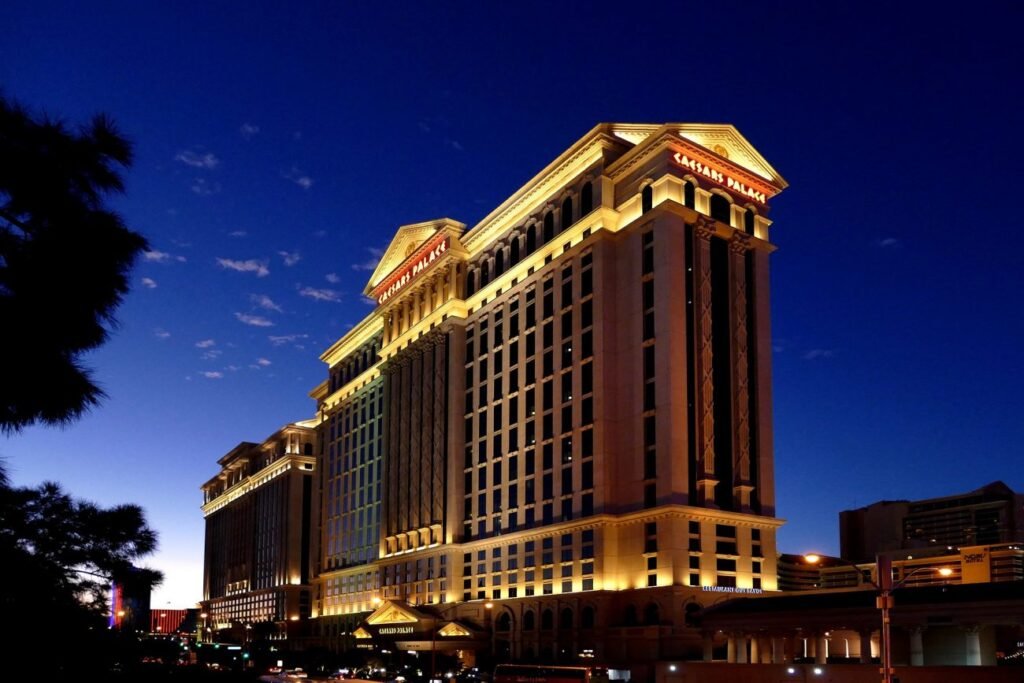
In late May, news broke that Caesars Entertainment was being acquired and taken private by Fertitta Entertainment in a deal valued at $17.6 billion when factoring in assumed debt. The acquisition represented the most significant move in the US casino industry in several years, perhaps since the last time Caesars was acquired by Eldorado Resorts in 2020.
Rumours surrounding a potential Fertitta acquisition had percolated for months before the deal was finalised. After the announcement, a second storyline then popped up in the following weeks — Carl Icahn, the billionaire activist investor who shepherded Caesars to the Eldorado deal before cashing out, was back in the mix as a competing bidder.
The few details about Fertitta’s deal and Icahn’s interest that surfaced in media reports made it seem as though the negotiating process was short and choppy, but a preliminary proxy filing submitted by Caesars on Tuesday shed new light on the bidding war.
According to the filing, the timeline actually extended back to 2025, with several rounds of competing offers and discussions between the three stakeholders, and even a mysterious fourth. Icahn, as it turns out, was also the first to approach Caesars about a deal, not Fertitta.
In the end, Fertitta’s acquisition was agreed to with the following terms, among others:
- A purchase price of $31 per share
- A per-share “ticking fee” that accrues daily if the deal isn’t closed by 26 June 2027
- A $6.6 billion financing package that includes a revolving credit facility and secured loans
- A $200 million termination fee for Caesars and a $450 million reverse termination fee for Fertitta
- An agreement for the Carano family to rollover significant equity into the new business
Caesars’ board has endorsed the transaction and a special meeting will soon be held to tally a shareholder vote.
Icahn approaches first
The story with Caesars may have ended with Fertitta, but it began with Icahn. In 2019, Icahn built a significant stake in the casino operator and spearheaded its $17.3 billion acquisition by Eldorado, which installed the Caesars leadership still currently in place. This includes the Carano family as well as CEO Tom Reeg, CFO Bret Yunker and CLO Ed Quatmann.
Following the Eldorado deal, Icahn sold his holdings and retreated back to his other ventures. Then in May 2024, Icahn began building another Caesars stake, which led to renewed talks. The two sides came to an agreement in March 2025 where Icahn agreed not to lodge a takeover offer or exceed 5% ownership of Caesars stock in exchange for two board appointments. On 17 March 2025, Caesars appointed Jesse Lynn and Ted Papapostolou, general counsel and CFO of Icahn Enterprises, respectively, to its board.
Discussions between Icahn and Caesars, specifically Reeg, continued throughout 2025. At that time, Reeg told iGB that Icahn wanted “to be involved” in company discussions and the CEO “welcom[ed] him to join us”. By December 2025, Icahn had made it clear that he wanted to pursue another deal, but no offers were submitted due to the board agreement. He pushed for Caesars to waive parts of the agreement to help make that happen.
That limited waiver was granted on 3 December 2025, which ran through 31 January 2026 and allowed for more formal negotiations to begin. But before Icahn could make a move, Fertitta entered the fray.
Fertitta notified Caesars on 19 December 2025 it was aware of Icahn’s interest and was preparing to lodge its own offer. Caesars quickly entered into non-disclosure agreements with both bidders, and from there the race was on.
Fertitta takes the lead
Icahn was the first to make a formal offer — on 2 January of this year, Caesars received a proposal for $28.50 per share, financed through $1 billion in cash, $1 billion in new equity and $3 billion in third-party debt financing. This new equity component would prove to be a sticking point for Caesars, as the high leverage and constrained cash flow from the new entity made the Carano family unwilling to rollover its holdings.
A week later, on 9 January, Fertitta made its first offer of $28.75 per share with a financing commitment letter from Morgan Stanley. Reeg presented a long-term financial plan to the Caesars board 21 January and both offers were discussed and ultimately rejected.
New offers from both bidders were then resubmitted 29 January. Icahn’s offer kept the same price but “included revised financing amounts” and other changes. Fertitta’s updated bid upped the price to $30.50 per share and other revised financial details. Caesars’ board convened again on 2 February to extend Icahn’s limited waiver and continue discussions with both parties in hopes of improving their offers.
Icahn upped the ante with a $32-per-share offer 5 February, which was followed by a $31.50-per-share offer from Fertitta the following day. Ferttita then matched Icahn’s $32-per-share price on 13 February with two consecutive offers within 24 hours. Shortly after, on 17 February, Caesars was notified that Icahn was formally withdrawing from the bidding process.
Caesars opted to move forward with Fertitta as the sole remaining bidder, and to that point, the process had remained private. Fertitta’s final bid of $31 per share represents a 49% premium to Caesars’ closing price on 25 February. The first media report linking Fertitta and Caesars in a potential deal was not published until the following day.
Who is Party B?
That first report from the Financial Times may have played a role in convincing Icahn to rejoin the race. On February 28, the last day of Icahn’s extended board agreement waiver, he came over the top with a $33-per-share offer and an updated cash contribution of $1.5 billion. Notably, that day also represented the beginning of the United States’ still-ongoing war against Iran, which would play a significant role in Fertitta’s subsequent moves.
The Caesars board did not favour the last-minute Icahn offer and discussions continued with Fertitta. On 16 March, however, Fertitta, perhaps aware of its leverage as the preferred bidder, notified Caesars that it was planning to lower its offer by $1 per share to $31 “due to increased macroeconomic risks and financing costs”. These concerns were likely related to the economic effects and stagnant interest rates stemming from the Middle East conflict.
It was shortly after this in early April that an unknown fourth party, referred to in the filing as “Party B” suddenly appeared. Party B contacted Caesars “claiming to be a family office” and expressed a desire to join the bidding war. This anonymous party said it was “prepared to submit a fully financed offer” for Caesars at $36 or $37 per share, significantly higher than the other two parties’ bids. The problem, though, is that this appeared to be a hoax.
“Over the next several days, [Caesars] and its advisors were unable to find any verifiable evidence regarding the identity of Party B,” the filing says. Party B reached out again 22 April but never replied to Caesars’ requests for more information.
Caesars unable to top $31
Throughout March and April, Caesars and Fertitta went back and forth with numerous proposals and counters. These discussions primarily hinged on details related to termination fees, ticking fees and equity rollover arrangements.
Another Caesars board meeting on 28 April revealed that Fertitta had officially lowered its offer to $31 per share “due to higher financing costs and increased macroeconomic risks” as noted above. By this time Reeg and the Carano’s had endorsed the transaction, although the market environment had resulted in “approximately $40 million per year in additional costs from when the process started”, the filing says. The board again rejected the offer and pushed for $31.50 per share.
Caesars tried multiple times in the final weeks of negotiations to fetch more than Fertitta’s standing $31-per-share offer, but the latter could not be moved from its position. Finally, in the wee hours of 27 May, agreement was reached, and one of the biggest names in US gaming had officially changed hands.
Both sides announced the agreement before the market opened 28 May, but that was not the last word on the matter.
Round Two begins
The consummation of the Fertitta acquisition kicked off a 45-day “go-shop” period which allowed Caesars to canvass for superior offers through 11 July. According to the filing, the company reached out to 20 potentially interested parties, including Icahn, and Reeg began meeting with Icahn immediately after the Fertitta deal was agreed to. The race that had been brewing between the two bidders would remain that way, as none of the other 19 parties were interested in an offer.
In late June, Caesars met with Icahn and its new financing partner, Jeffries. Reeg was lukewarm about Icahn’s proposal terms due to “high leverage and reduced free cash flow”, because those effects would “make it unlikely that the Carano family would be willing to roll their equity in such a transaction,” the filing says. Details of Icahn’s renewed interest resurfaced in the media in early July in connection to Jeffries shopping a $5 billion debt financing package.
On 10 July Icahn jumped back in the race right before the go-shop window expired with a new offer of $34 per share, which was in hindsight the highest bid submitted for the operator.
This new offer assumed “that at least 5 million shares held by the Carano family would be contributed to the buyer vehicle”, the filing says, as well as “approximately $860 million of rollover equity from the Icahn Group and its subsidiaries”. The debt financing from Jeffries, however, was $6.5 billion, significantly higher than what had been reported.
Jeffries’ debt commitment letter was also “undated, unsigned and incomplete with respect to terms and covenants, including interest rates and the amount of warrants proposed to be issued to potential debt investors,” per the filing.
Nine months later, a winner
With the go-shop window set to expire, Caesars’ board agreed to a two-week extension through 25 July to keep talks alive. This explains why Fertitta’s general counsel Steven Scheinthal and CFO Richard Liem said little about the status of the deal when appearing before the Nevada Gaming Control Board and Gaming Commission for licensing — it was still being negotiated.
Icahn informed Caesars 13 July that the new proposal was dependent on the Carano’s equity rollover and even asked for Caesars to “assist them in raising the necessary financing”. Jeffries also said that it could not execute the debt commitment without “back-to-back commitments from other investors that had not yet been identified”. Reeg and the Carano’s responded the following day that Fertitta’s terms remained superior.
Fertitta was kept informed of these developments in the meantime, and confirmed again on 20 July that it was unwilling to raise its price. On 22 July Icahn sent its final addendum, offering to replace $1 billion from the debt financing package with $1 billion of equity capital. In response to further inquiries from Caesars, Icahn said the terms “speak for themselves”.
The negotiating window was extended again to 10 August, but no further progress was made. On that date, Icahn was informed that Caesars “remained open to discussion but there had been no material
progress on the fundamental issues” that had been raised. As a result, the clock ran out, and Fertitta emerged victorious, approximately nine months after the battle began.

Jess Marquez
Jess has covered the global gaming industry since 2022. A native of Reno, Nevada, he’d like to note that it’s Ne-va-da, not Ne-VAH-da.