
Slot machines have long delivered the majority of gaming revenues for casinos. However, table games – once considered an endangered species – remain strong, thanks to a combination of their traditional status as the center of the casino, side bets that add volatility and raise the house hold, and new players learning the games thanks to electronic table games.
Those were the conclusions of a panel discussion Tuesday at the Indian Gaming Tradeshow & Convention in San Diego. The panel, moderated by Nasr Sattar, executive vice president, solutions at NRT Technology Corp., featured industry veterans Matt Reback, president and CEO of leading side-bet supplier Galaxy Gaming; Ari Mizrachi, senior vice president and head of North America business for Tangam Systems; and Jon Hanlin, president, global tables, Light & Wonder.
Intersection of table games, slots
“The pit is the energy center of a casino on a Friday or Saturday night,” said Reback, whose career has spanned both the supplier and operator sides of the industry. “Players still want that tactile feel; they want that haptic experience with the chips, to feel them in their hands. They want to see the cards and touch the cards.”
Mizrachi added that 50 percent of table players today also play slots, which has provided another sustaining factor for the pit, as suppliers continue to produce side bets that provide slot-like volatility, along with raising the hold well above the traditional table games.
“You should let that sink in as table-game operators,” Mizrachi said, noting that two decades ago, the number of table-game players who also played slots was closer to 10%. “The mechanical reel players did not play table games. They were different customers. But today, they’re looking for volatility, and that’s why Jon (Hanlon’s) new game Double Down Madness is working – because it’s blackjack on steroids.”
Light & Wonder’s Double Down Madness allows players to double down on any hand and allows them to hit after doubling. The price for that is that if the dealer draws to 22, any standing wager is a push – unless the player makes the “push 22” side bet, which pays 11-to-1 for a dealer 22. This raises the average house edge from around 1 percent with basic strategy to 4.8-5.7%, depending on house rules.
Games with new rules, side bets and, particularly, progressive jackpots have added volatility to the pit with slot-like elements that increase the hold. Side bets like Lucky Ladies and 21+3 have been widely accepted by players, even though they know the house hold is higher, noted Mizrachi.
“Average blackjack holds in Nevada are 12.7%,” he said. “That means players aren’t using strategy, and will be open to side bets.” He said more players these days are looking for life-changing volatility.
The role of Electronic Table Games
The panel noted that electronic table games have held steady in their footprint on casino floors but have provided a boost to the pit because they provide a non-intimidating way to learn the traditional games.
“Have ETGs plateaued? I think ETG have always been plateaued,” said Hanlon. “They’ve evolved, but they haven’t spiked or declined in a long time. They have been 2% of the EGM floor for two decades. Have they changed? They have gone to stadiums; they have evolved as far as the form factor and what they’re used for. Absolutely. But I do believe that ETGs are in a transition period now from that larger stadium experience to what the industry calls standalone products or individual experiences.”
He said the benefit to the individual player is that ETGs speed up decisions. “I believe ETGS have a long way to go, but they will evolve with the live table experience.”
Reback added that side bets like 21+3 and Lucky Ladies are popular in ETGs, and have remained popular both with traditional table players and slot players. “It’s a hybrid product,” he said. “It’s not going to replace either type of player. For the operator, it solves a labor problem. If you want to have a low-limit table, fractional plays, complex math, progressives, or certain bonus features dealer couldn’t manage on their own, ETGs provide variety. The key is to recognize the right level of ETG saturation on the floor and try to complement it so you’re making sure players have the game they’re looking for.”
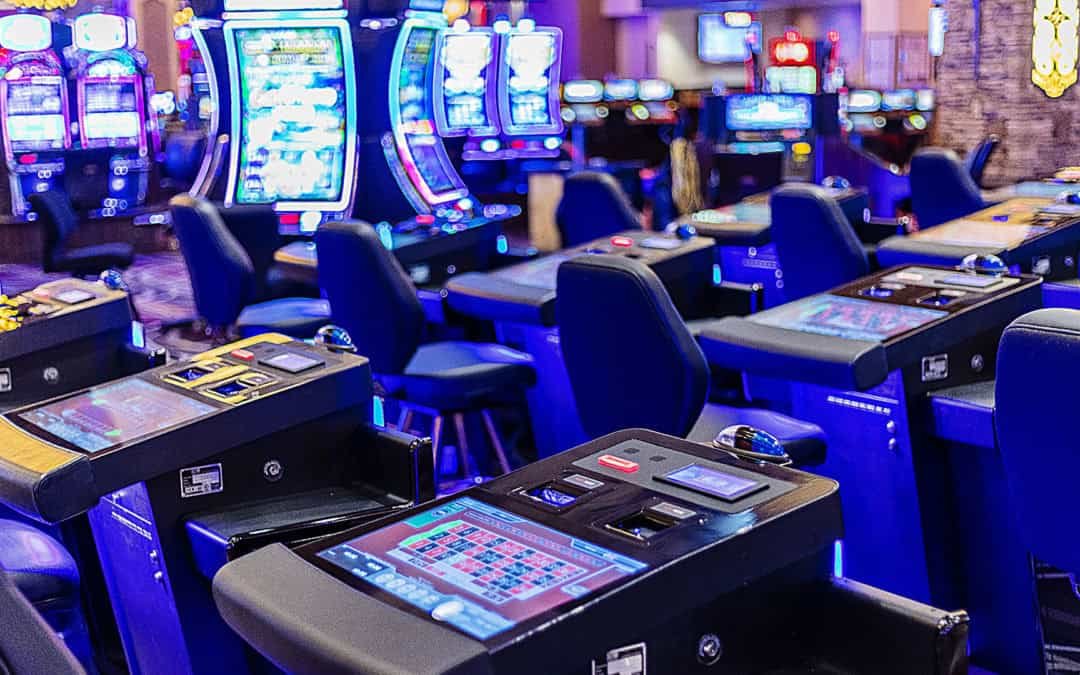
Hanlon noted that ETGs are evolving with new presentations. “We have a product called Virtual Pit that takes the experience of hybrid stadiums so everyone’s playing the same set of cards,” he said. “Virtual Pit allows you to play your own set of cards against other people live in the pit. It’s a little like online poker, where you pick your seat and get cards, but there are live people playing with you in a virtual experience. That also allows us to link in the live table-game progressives.”
Mizrachi noted that ETGs are not without drawbacks, particularly in jurisdictions that classify them slot machines. In that case, he said, they are “alienating the VIP” because any win of $2,000 or more generates a W-2G form. “This would drive high-end players crazy,” he said, with play interrupted by every high win. He also said casinos will not offer higher than 2X odds on craps ETGs. “Live table players will not play 2X odds,” he said. By offering only 2X, “they’re saying, we don’t want you to play ETGs.”
Online table games as instant data source
Online table games provide another type of advantage, panelists said. That advantage is the instant data they provide. Hanlon noted that in the live pit, casinos have not made the investment required to zero in on generating data. “At Light & Wonder, we worked on RFID chips, and we shelved it,” he said. “There’s a limit to what operators are willing to pay for.”
Artificial intelligence, he said, may change that, and could bring the cost down. He said he envisions more operators experimenting with AI in the near future.
“AI is a machine that consumes data,” said Reback. “The more data we can collect—whether cameras, RFID, seat sensors—the better it is. But pattern detection is where the real value is; it can help with game protection.”
He added that AI can give a great boost to marketing, by recognizing patterns of losses in time to intervene before a player “makes the fatal decision” to leave the casino and never come back. “If we intervene with a comp, a show ticket, a room, that’s where the player can see the value of the experience. This is where AI can really aid marketing.”
All the panelists agreed that the table game is still a viable, healthy offering for casinos. “With the dealers and the interaction, it’s a social game,” said Reback. “Table games will always be around because there are people in this world who love to go places and talk to people. Those are the people who love table games.”

Frank Legato
Frank has been writing on gaming topics since 1984. He has served as editor and reporter for a variety of gaming publications, including Public Gaming, IGWB and Casino Journal.