The March Madness championship arrives as courts, lawmakers, and governors line up a busy week of developments across prediction markets, sports betting, and sweepstakes casinos.
This week brings the March Madness championship, a potentially pivotal Arizona court ruling on prediction markets, and a fresh round of hearings targeting sweepstakes casinos and other unregulated gaming.
Governor decisions in Wisconsin and Maine add to what is shaping up to be another busy week for the U.S. gambling industry.
March Madness Final Caps Record Betting Interest
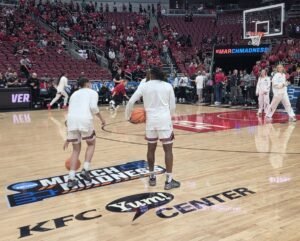
The NCAA men’s national championship game tonight between Michigan and UConn will close out what could be one of the most heavily wagered March Madness tournaments. Michigan entered the matchup as a top-three betting favorite on both traditional sportsbooks and prediction markets.
Beyond the result, this year’s tournament will draw attention to the scale of wagering. The American Gaming Association estimated that Americans will legally wager about $3.3 billion across the NCAA tournaments.
In addition, prediction markets are capturing meaningful trading volume. While prohibited from using trademarked language, platforms like Kalshi drew early attention with various promotions, including a $1 billion bracket contest.
In the morning before the final, the champion market on Kalshi has generated over $228 million in trading volume. Meanwhile, on Polymarket, which operates under limited capacity in the U.S., volume is about $26 million.
What to Watch:
- Post-game data releases from operators and market trackers, including handle, prop betting activity, and parlay mix, as well as how the final result impacts operator hold.
- Indications of the scale of volume prediction markets have been captured from traditional sportsbooks.
Prediction Markets Litigation Continues
Two closely watched hearings in the state vs. prediction markets legal battle took place on April 3. While a federal judge in Nevada extended a ban on Kalshi’s offering of certain event contracts in the state, there was no ruling in Arizona.
A federal judge heard arguments on Kalshi’s request for a preliminary injunction against the state and whether the court should even hear the case, given Arizona’s criminal proceedings against the platform, but did not issue an immediate ruling. A decision is expected this week.
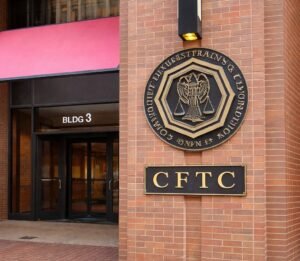
At the same time, the legal battle has escalated at the federal level. The U.S. government has filed lawsuits against Arizona, Connecticut, and Illinois, arguing that state efforts to regulate event contracts infringe on the Commodity Futures Trading Commission’s exclusive jurisdiction.
The move raises the possibility of additional federal lawsuits against states, particularly those that have taken or are considering enforcement action against prediction markets.
Elsewhere, Washington could emerge as a developing battleground. In late March, the state filed a lawsuit against Kalshi, alleging the platform is operating an illegal gambling business. The operator removed the case to federal court, while Robinhood filed a separate preemptive lawsuit against the state.
What to Watch:
- Whether there’s a ruling in Arizona
- Whether the CFTC will file lawsuits against other states
- Any movement in Washington. That includes whether the state will seek to remand the case to state court, a move that proved successful for Nevada.
Hearings on Sweeps and Prediction Markets Bills
Scheduled Hearings in OK, LA, TN
On the legislative front, multiple bills addressing sectors, including sweepstakes casinos and prediction markets, are scheduled for hearings this week.
- Oklahoma’s SB 1589 is scheduled for a House Criminal Judiciary Committee hearing on April 7. The measure, which amends the state’s gambling statute to explicitly include online casino-style offerings, passed in the Senate in early March.
- Louisiana’s HB 883 will receive its first committee hearing on April 8. The measure explicitly prohibits dual-currency payment systems.
- On April 8, Tennessee lawmakers will hear HB 1885, a sweepstakes ban bill, and HB 2079, a prediction market ban bill. Both bills will receive second committee hearings after advancing from subcommittees and full committees.
Bills in IA, MD, MN, and LA Could Receive a Hearing
Elsewhere, several bills could be taken up this week.
- Iowa’s SF 2289 sits in the House Ways and Means Committee. It advanced from a subcommittee last week, and the full committee meets this week. The measure has already passed in the Senate.
- In Maryland, the Senate Budget and Taxation Committee heard testimony on two sweeps-related bills without taking a vote. It will likely vote on the measures at one of the next meetings, which could be as early as this week.
- In Minnesota, lawmakers in both chambers have advanced measures targeting sweepstakes casinos (SF4474 and HF4410) and prediction markets (SF4511 and HF4437). Their assigned committees have not scheduled a hearing date, but given the pace they moved previously, it could occur as early as this week.
- The Louisiana House passed HB 53, which targets sweepstakes operators under racketeering statutes. The measure awaits assignment in the Senate.
What to Watch:
- Whether Oklahoma lawmakers advance SB1589, potentially moving it to the House floor.
- Whether lawmakers in Tennessee advance HB 1885 or conform it to its companion bill, SB 2136, which already passed in the Senate and awaits action in the House.
- Whether Louisiana lawmakers choose to target sweepstakes casinos through HB 53 or advance HB 883. Last year, a bill passed in the Legislature, but the governor vetoed it.
- If lawmakers pick up any of the bills awaiting a hearing date this week or receive a hearing for a future date.
Governor Decisions Pending in Wisconsin and Maine
Beyond legislative movement, two states remain in focus at the executive level.
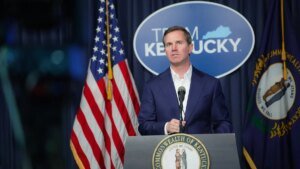
In Wisconsin, a bill that would enable online sports betting through tribal agreements, which passed in March, was formally delivered to Governor Tony Evers’ desk on April 2. The governor’s decision on whether to sign or veto the bill is due this week. If he vetoes it, the Legislature could overrule it by a two-thirds majority in both chambers.
In Maine, lawmakers have sent a bill to ban sweepstakes casinos to Governor Janet Mills. The Legislature formally enacted the measure on April 2, giving Mills 10 days to decide. That means a decision could come this week or next week.
Mills has already signed two measures affecting the gambling industry this year. In January, she signed a measure legalizing online casinos, and last week she signed a bill banning credit card deposits for sports betting.
What to Watch:
Whether the Wisconsin governor signs or vetoes the bill, and whether Maine becomes the second state in 2026 to formally ban sweepstakes casinos, following Indiana.
The post March Madness Final, Prediction Markets Litigation Lead the Gambling Stories to Watch This Week appeared first on Gambling Insider.