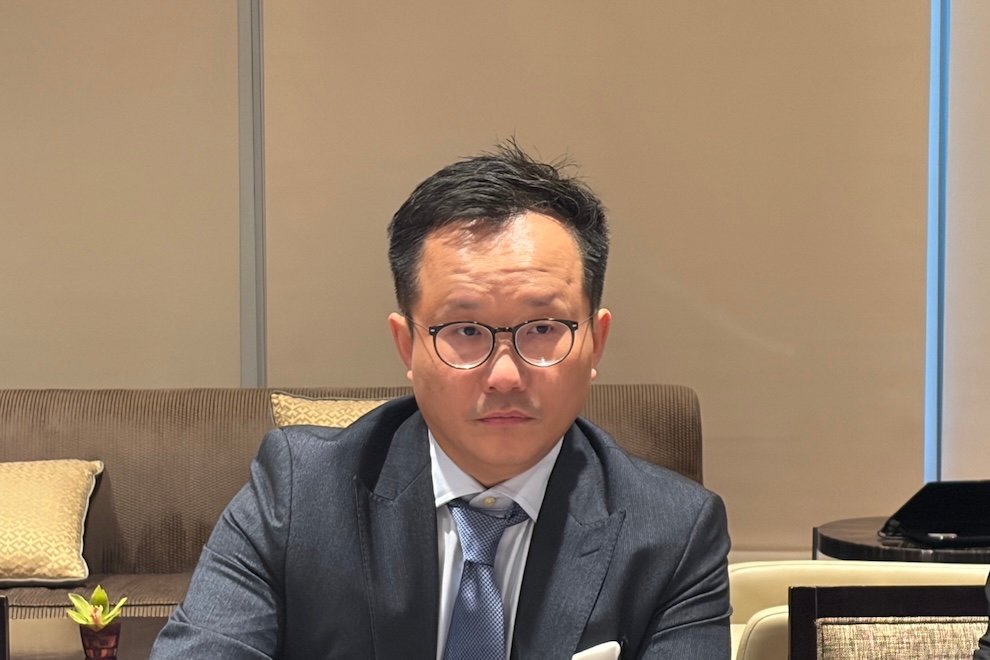
Philippines-listed licensed online gaming operator DigiPlus Interactive Corp has appointed Ping Chen (pictured) as the group’s new president, replacing Andy Tsui, who stepped down from the role on Friday after more than four years with the company.
Mr Chen was also elected to the board during DigiPlus’ annual stockholders’ meeting on Friday.
The group’s chairman, Eusebio Tanco, said Mr Tsui would leave “big shoes to fill”, adding: “We wish you continued success in your future endeavours.”
During a media roundtable on Friday, Mr Tsui stated he would “stay for a few weeks to support the transition” at DigiPlus.
Mr Chen is said to have around 22 years of experience “spanning the technology industry, investment banking, corporate finance, strategic investments, and executive leadership”.
Prior to his appointment, he served as chief financial officer and chief investment officer at Shenzhen-based technology service provider Digital China Group Ltd. Before that, he spent two decades in global investment banking at firms including Moelis & Co, Bank of America Merrill Lynch, Citi, and Morgan Stanley.
Mr Tanco said the appointment of Mr Chen was a “strategic move” for DigiPlus.
“His extensive global experience, strategic insight, and proven leadership capabilities position him well to help steer the company through our next phase of expansion and long-term value creation,” the chairman stated.
In comments to reporters, Mr Chen said he would focus on outlining the firm’s long-term strategy in a bid to “improve” the group’s “financial performance and operational efficiency”. He also said the company would continue to expand and enhance its portfolio of digital platforms in order to acquire and retain customers.
“My mandate… is to push for the expansion and sustainable growth of the company,” Mr Chen stated.
Brazil relaunch, consolidation in the Philippines
DigiPlus’ management also provided updates on Friday regarding the firm’s progress in overseas markets and its performance in the Philippines.
Celeste Jovenir, DigiPlus’ vice president of investor relations, said the company is targeting the resumption of online gaming operations in Brazil this June.
The firm paused operations of its gaming platform in the South American nation in mid-October, less than one month after its launch.
“We continue to prepare for the relaunch of operations in Brazil,” Ms Jovenir stated. “We target to do that in June, before the [FIFA] World Cup, to take advantage of that event,” she added.
In mid-April, DigiPlus said it had received online gaming licences from the Western Cape Gambling and Racing Board in South Africa.
“This will pave the way for our entry into one of the biggest regulated markets in Africa. We target to launch there in 2027,” the executive added.
Ms Jovenir also said the company was seeing “signs of stabilisation” in terms of business performance in the Philippines. “We expect recovery to gradually continue as users transfer to our proprietary apps and platforms,” she noted.
DigiPlus reported net income of PHP2.82 billion (US$45.9 million) for the first three months of 2026, down 32.9 percent from a year ago. First-quarter consolidated revenue decreased 25.2 percent year-on-year, to PHP17.24 billion.
During Friday’s media event, DigiPlus’ management said the firm was still aiming to recover “by year-end” the business volume levels recorded before the de-linking, in August last year, of electronic wallets from online gambling platforms in the country.
Mr Tsui said during the media briefing that the group expected “consolidation” in the Philippine market following the introduction of a “minimum guaranteed fee” to be paid by all locally-accredited gaming system administrators (GSAs), as announced by the nation’s gaming regulator, the Philippine Amusement & Gaming Corp (Pagcor).
The new fee regime is scheduled to begin on June 1, following a two-month deferral.
“Based on the market, there are probably around 35 to 40 operators that do not reach that threshold, meaning that the cost of operation [for them] will be higher,” Mr Tsui noted. As per Pagcor’s regulatory website, there were 62 accredited GSAs as of May 28.
“So, we do expect that there will be some sort of market consolidation down the road,” he added.