The SBC News team are live on the ground for the second day of the SBC Summit. Stay tuned to this blog for the latest updates from the SBC News team on the ground at Lisbon – Ted Orme-Claye, Patrick Killeen and Ted Menmuir – as well as our colleagues at iGaming Expert.
4:45pm: Prediction markets getting investor interest … but there’s a catch
Reporting by Ted Orme-Claye
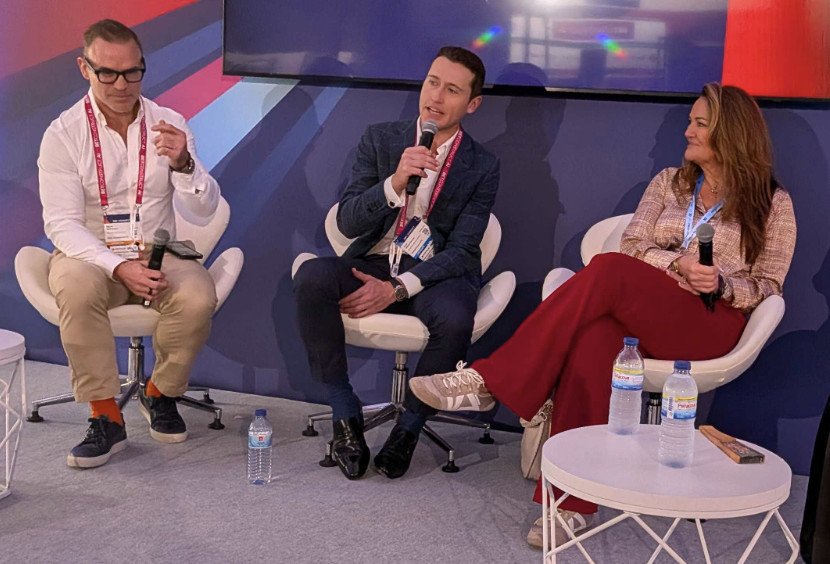
Prediction markets are now well on the agenda in Lisbon as the conversation turns to the rapidly growing but still very controversial industry, with the Prediction Markets Forum due to take place tomorrow.
“Prediction markets are the hot industry right now,” says Tom Waterhouse, Chief Investment Officer at Waterhouse VC. “Before that it was sweepstakes, and before that fantasy and sports betting.
“We’ve looked at several businesses and the ability of them to pivot and become a prediction market business, and get funding. The big test will be if they can retain customers better than their competitors.
“It’s hard to know long-term if they can retain those customers, and what the regulatory landscape will look like.”
Prediction markets are still a hard sell for some investors, however. Klen Kaljulaid, Partner at Yolo Investments, reveals that the firm “said no” to investments in Polymarket during multiple valuations of the global prediction giant.
In the case of one of its valuations, Kaljulaid said that Yolo was put off the idea of investing in Polymarket because at the time it was effectively a “black market operator” active in “the most dangerous market, the US”.
4:35pm: Prepare for the worst for predictions, but fundamentals won’t go away
Reporting by Patrick Killeen
William Chambers, COO at Smarkets, says prediction market operators have to be prepared for “a lot of different outcomes due to uncertainties”.
“What is really interesting and what won’t go away, irrespective of what the Supreme Court decides or any regulators decide, is this convergence between financial trading and some of these products that we historically thought about as gambling,” he adds.
On the potential of easing regulation on predictions in Europe, Chambers affirms that Smarkets has been pioneering an all-but-the-same space in the betting exchange for over 15 years, and has always been a market leader in politics.
There is some excitement though, as he comments: “From a regulatory perspective, it would be wonderful if a similar thing happened to what is happening in the US.”
4:30pm: Sink-or-Swim:… AI shapes investor sentiments
Reporting by Ted Menmuir
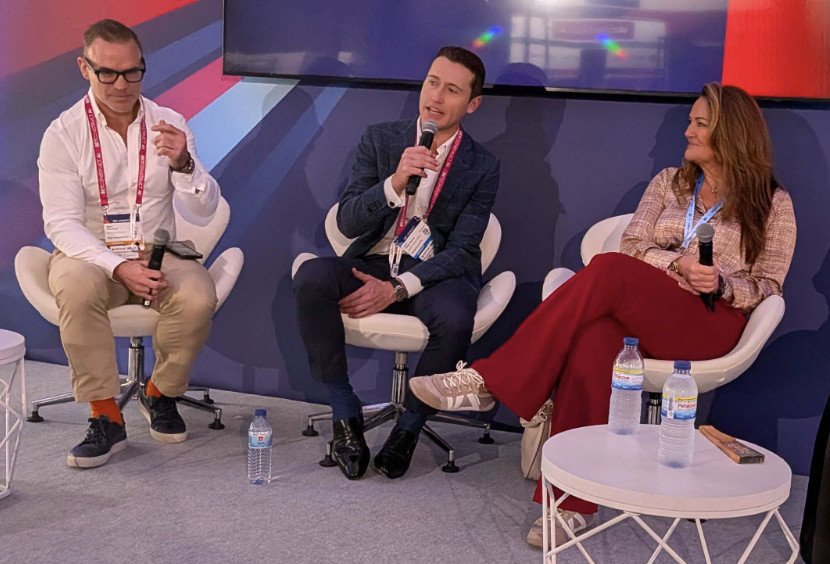
Seasoned investors in iGaming, believe that AI is now eye of the storm, with regards to their valuations, strategies and most importantly sentiment.
Paris Smith, the former CEO of Pinnacle and renowned investor in early-stage igaming enterprises views AI as a “unavoidable element in determining all investments and valuations”.
Its potential is emphasised to improve competitiveness, address legacy technology constraints to reduce expenditure. The use of AI sees Smith question why “so many in iGaming still have spaghetti tech stacks”.
“Now you can use AI agents for those hard deliveries and integrations” she said. This marked efficiency sees founders consequently raise less capital and retain more ownership of their companies… “Imagine if you only had to raise $750,000 and you could keep more of your company.”
For Tom Waterhouse of Waterhouse VC, cheaper development makes distribution more effective. Yet for investors it places a greater scrutiny of valuations (“especially those in the USA”).
An investor of gambling firms since his teens, Waterhouse now questions “product durability and whether businesses possess advantages that survive the AI’s paradigm shift.”
“We really like looking at businesses that either have got something that can’t be replicated through AI, or businesses that are able to build large distribution channels,” he explained.
Waterhouse highlighted professional betting syndicates with proprietary datasets and models as attractive investments, describing them as an area “that has not been killed by AI just yet”.
Mike Robinson, Head of Investor Relations at Yolo Investments, said AI has become a practical test of whether a proposed investment offers lasting value.
As such, AI has changed the investment strategy of Yolo. “Could AI do this, and could it be replaced like that?” Robinson asked, explaining that easily replicated products may struggle to mature into sustainable businesses.
Yolo’s interest centres on companies applying AI to improve operations, rather than investing specifically in AI laboratories. Robinson said founders must explain: “What is it actually doing? What is it solving in the business?”
However, rapid innovation complicates investment decisions. Robinson warned that “six months later, something new is going to come, and then our investment just sinks”.
4:00pm: Will we ever learn?
Reporting by Ted Orme-Claye
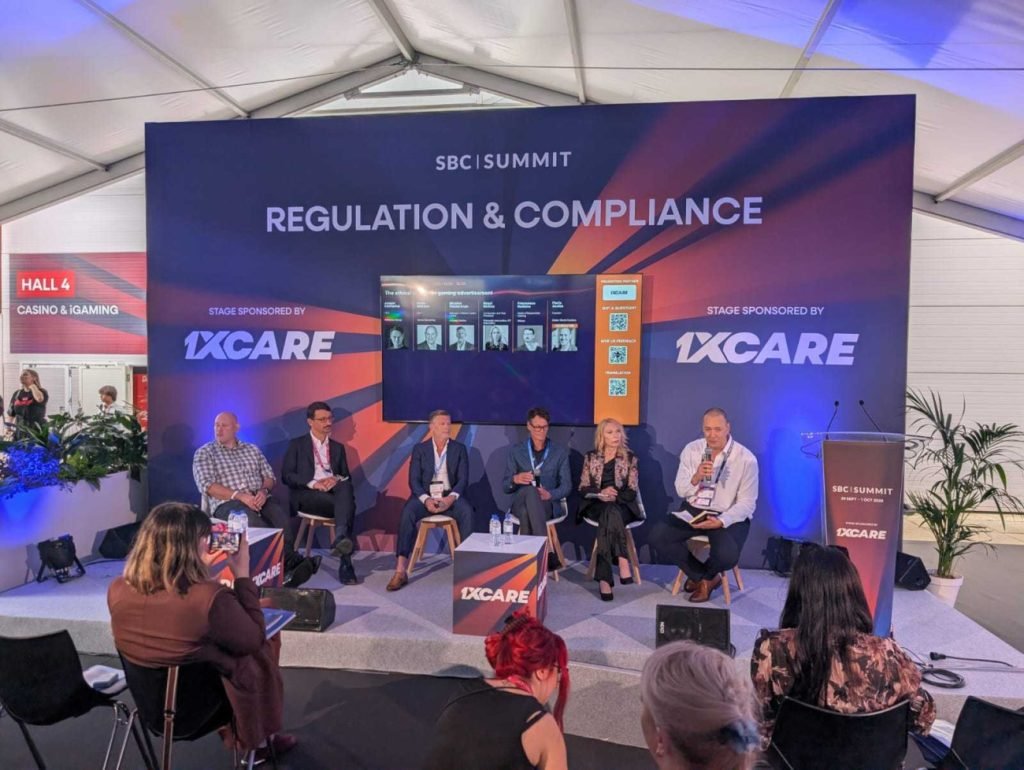
Peter Marcus, CEO of Savvy Hill Marketing and the former Entain executive who built the company’s ARC responsible gaming programme, has some fiery words on the topic of gambling advertising, and the ethics around it.
“At what point are we doing to learn the lesson that if we go completely bonkers … that we need to control ourselves and not get advertising banned? Brazil is the latest.”
Governments have been blocking gambling advertising across the world – the Netherlands, Belgium and Spain to name a few European examples, while Brazil has taken the ultimate step of banning the market together (Congressional approval pending).
Marcus thinks the industry should bear some responsibility for this, and learn from it, though he does still defend advertising as one of the main benefits and incentives for regulated, licensed, and transparent gambling businesses.
“The only benefit of having a licence as opposed to operating from Curaçao, Panama, Anjouan, or wherever is that you can advertise. You pay the tax, you pay everything else, and you can advertise – that’s a fair deal between governments and operators.”
3:50pm: Big Tech cohesion a necessity to cut short lifespan of black market
Reporting by Patrick Killeen
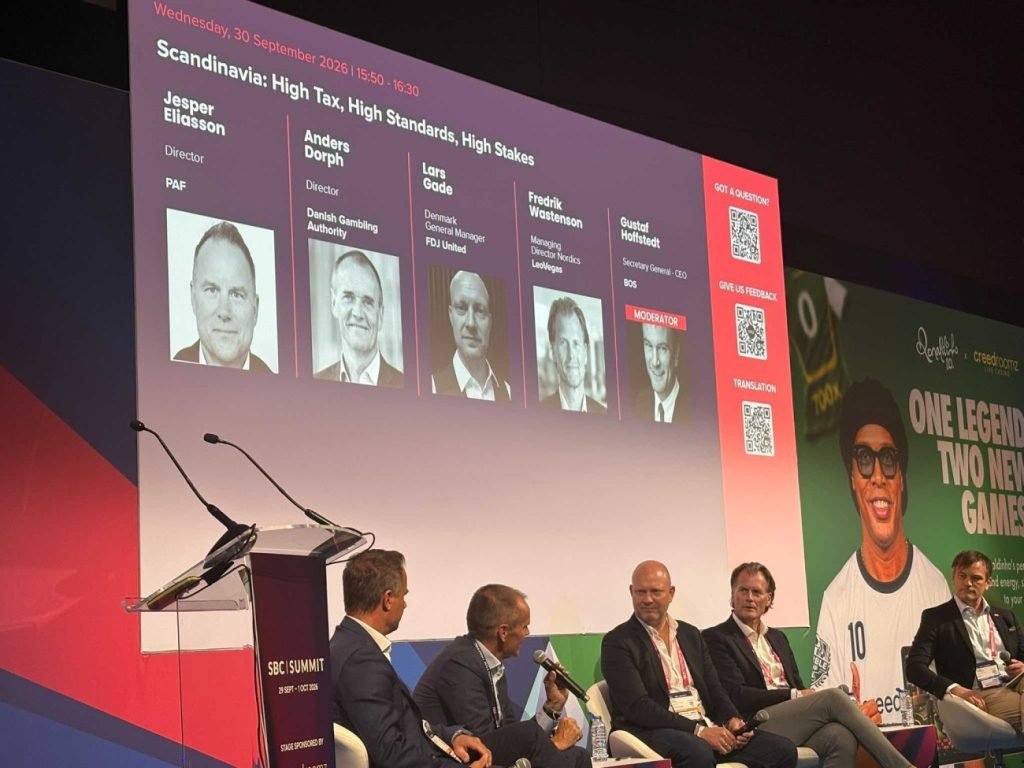
Following on in the same vein, the Scandinavia-focused panel kicks off with figures discussing the rise of the black market.
Anders Dorph, Director at Spillemyndigheden, Denmark’s gambling regulator, says: “We have meetings with Big Tech and with my fellow regulators from around Europe, with the gambling regulators of the European Forum, and we are trying to put pressure on Big Tech.
“We are also discussing getting some help on payment blocking because we need to do something new. We do need to do something different, otherwise, the black market in Denmark is here to stay.”
Fredrik Wastenson, Managing Director for LeoVegas’ Nordic operation, is worried about Sweden’s continuously-declining channelisation rates as the jurisdiction and its operators persist in their efforts of tackling the unregulated market.
3:30pm: More digitisation = more control = more safety?
Reporting by Ted Orme-Claye
Jesper Kärrbrink, CEO of Nordics-focused online casino company Immense Group, believes that the increased digitisation of the industry has actually helped combat problem gambling and gambling addiction, not the other way around.
“Advertising has skyrocketed in this time, access to games has skyrocketed, the availability of play has skyrocketed, but still the problem gambling rates have gone down,” he says. “It seems that the more digital the industry becomes, the more control we can get over the play.”
3:10pm: “Action needed” against UK black market as Flutter figure reveals details of meeting with Gambling Minister
Reporting by Patrick Killeen
The UK market is tricky to navigate currently, to say the least.
“Absorbing the impacts of tax increases” has become a fairly common term, but for Andy Wright, Managing Director for the UK and Ireland at BetMGM, that’s not the right term.
“It’s been said that we’re expecting about a $500m impact from next year as a result of those tax changes. So it’s a big number for a big business. I wouldn’t describe absorbing it as the right word.
“I think it’s reacting to it, and it’s difficult to get into exactly how we’re doing that, but there’s probably four dimensions to think about. We can essentially give less back to our shareholders, we can reduce our market spend. We can give less to customers, or we can optimise our other spend.
“It’s a really delicate balance to get right, and we’re trying to do so to reduce the risk of customers leaving for the black market.”
The black market is something that all industry bodies, companies and regulators should be aware of, at least in the opinion of Richard Clarke, Managing Director for Paddy Power Betfair.
“We need to focus on the black market,” he affirms. “We spent some time with the Gambling Minister recently, showing some of the work that we’ve done on analysis around the black market and around the actual consumer experience of being a black market customer is horrific.
“I don’t think people actually always can see what that looks like. So educating in that space is really important, but I think we really need to start taking action.”
3:00pm: Building bridges
Reporting by Ted Orme-Claye
The need to improve conversations with regulators has not been lost on operators at this year’s Summit. Recent developments in markets like Brazil, the UK and the Netherlands, among others, have likely hammered this home.
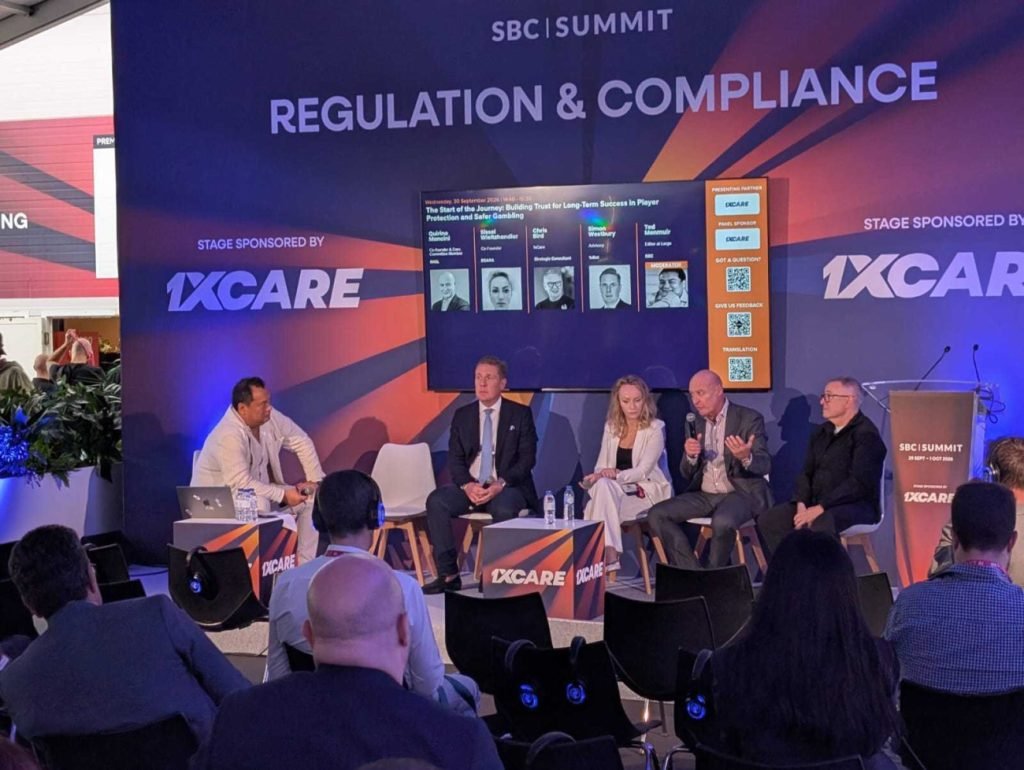
“When I was at a football club and we brought people into talk about sponsorship, the first thing we talked about was fan engagement,” says Chris Bird, an Advisory Board Member with safer gambling programme 1xCare.
“It starts with dialogue between the sponsor, the club, the fan, the operator. It has to take place. And it is taking place in a lot of places, but it doesn’t seem to take place with the regulator involved.”
Sissel Wieitzhandler, Co-Founder of the EGARA advisory network, reiterates the need to get as many stakeholders involved in conversations around safer gambling and responsibility.
“We want to bring about discussion, change and trust,” she says.
Meanwhile, Simon Westbury, an advisor for international betting company 1xBet, highlights the need for education, research and technology geared around responsibility, but adds that: “If we don’t deliver, the trust isn’t going to be there. The question is how are we going to deliver.”
2:15pm: Alea reveals doubling of sweepstake activity
Reporting by Ted Orme-Claye
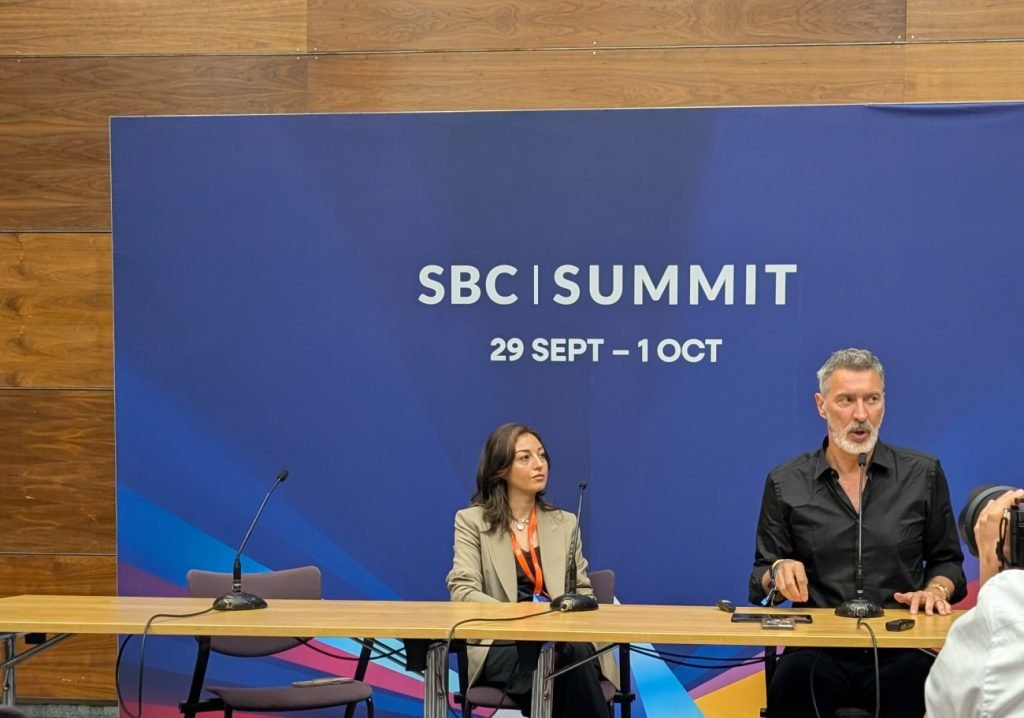
Gaming technology company Alea is making big strides in the sweepstakes space, group leadership revealed during the first press conference of the second day of the SBC Summit.
“We expect exponential growth,” says the firm’s CEO, Jordi Sendra.
Over a four-month period between April-August 2026, Alea saw sweepstake activity increase dramatically from 11% of total business share to over 17% by the end of August. It has now doubled from 10% before April to over 20%.
Breaking down the firm’s sweepstake activity, Sendra explains that the firm now has 1.5 million unique sweepstake players, with 37.5 million sessions played and 2.3 billion in bet volume recorded.
“It is a big opportunity for new games studios to come out of the market and gain a significant share of the market,” he adds.
2:00pm: “Time for Meta to uphold their responsibility”
Reporting by Patrick Killeen
Björn Fuchs, Chairman at Dutch industry trade body VNLOK, has further explained at the SBC Summit the organisation’s decision to sue Meta.
“You can see how much advertising there is on Meta platforms. We have tried to communicate but they have only offered automated responses,” he reveals.
“We don’t see any improvement – in fact, it’s getting worse. Now is the time for them to uphold their responsibility.”
Eric Olders, CEO and Chairman at JVH Gaming & Entertainment, thinks that regulators should “just toughen up” in their enforcement against the black market.
“We should be more confident and not just open it for an interesting dialogue. I think [the current attitude towards illegal gambling] is not going to work,” he comments.
Justin Franssen,Co-Founder and Head of the Gaming and Gambling Practice Group at Franssen Tolboom Attorneys, is concerned about players’ attitudes towards the illegal market.
He explains: “Players don’t give a flying you-know-what about whether an operator is licensed. The new measures implemented – I am doubting that this perception will change because I don’t think that they will work.”
1:30pm: Football frenzy on the Super Stage
Reporting by Ted-Orme Claye
Sergio Goycochea, the Argentine football legend whose legendary saves led his country to the 1990 World Cup final, takes to the stage. The former Racing Club and River Plate goalkeeper reflects on his long and storied professional career.
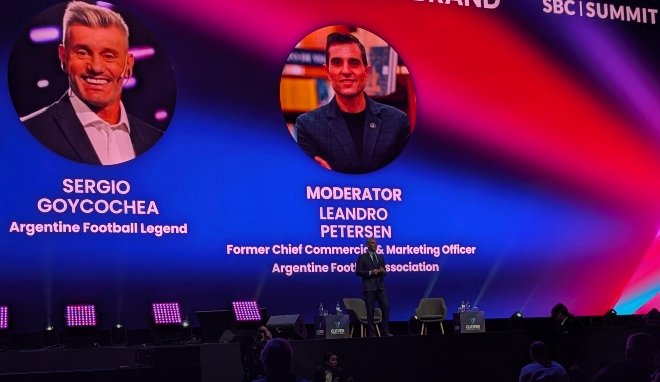
His appearance follows a fireside conversation between football journalist Fabrizio Romano and Lasha Machavariani, founder of SMH Global, with the duo discussing the future of football fandom and influencer-media relationships.
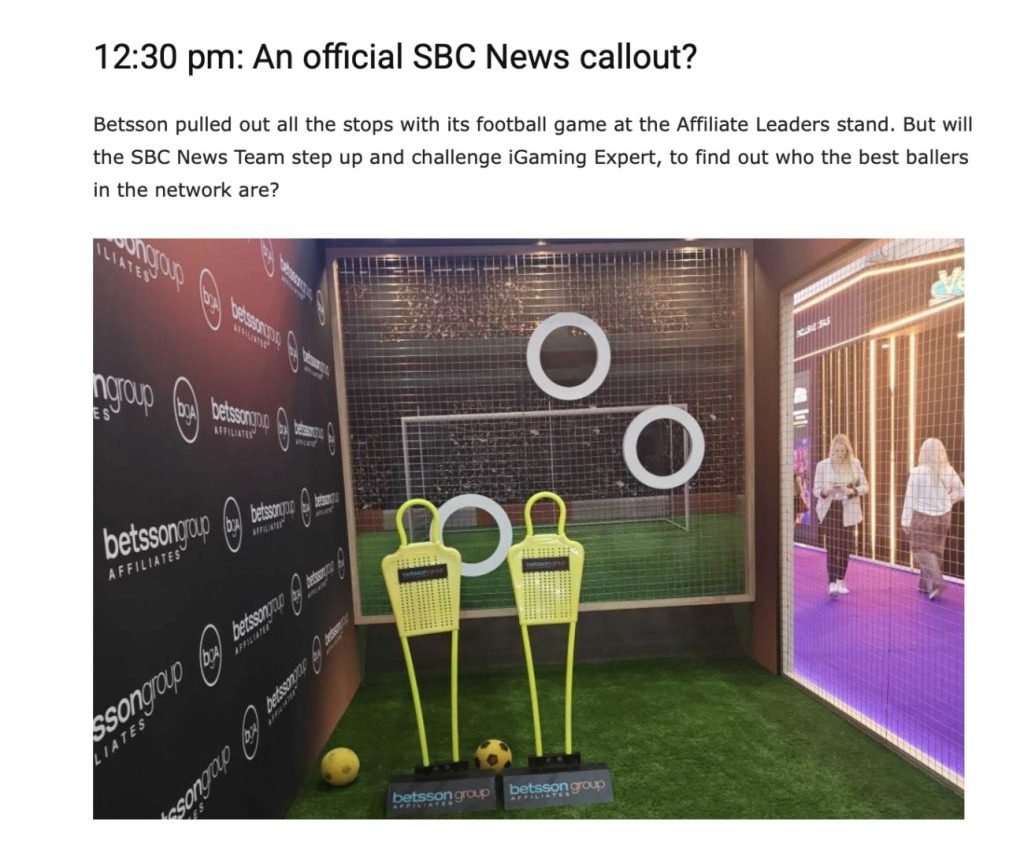
13:00pm: Careful what you wish for…
The SBC News team has heard that our sister publication iGaming Expert has called us out. We’re not exactly known for turning down a football challenge, so we’ll see you on the pitch.
12:45pm: Italian retail questions remain
Reporting by Christian Lee
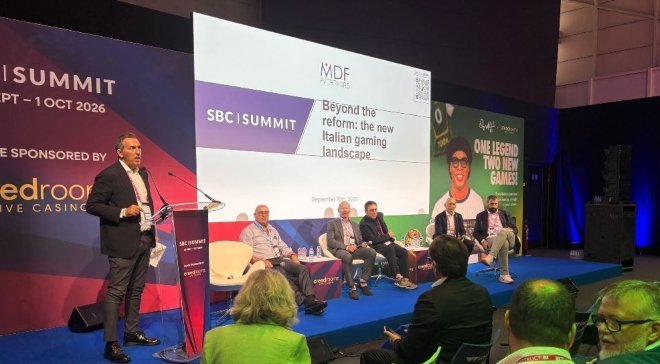
Though Italy has undergone a significant transformation in its online gambling regulation, oversight of the retail sector continues to lag behind, according to Sisal’s Managing Director Marco Tiso.
Tiso lamented the different promotional tools available across the two verticals, noting that consumers are faced with different prices and payouts depending on where they choose to wager, even as the ratio of retail to online continues to converge.
He said: “Yesterday, we had a lot of customers coming from retail to online. Probably tomorrow, it will be online that will send customers into the retail shops to complete their experience with the sociality, with the community experiences that you cannot get in the online shop.”
12:30pm: It’sssss time
Reporting by Patrick Killeen
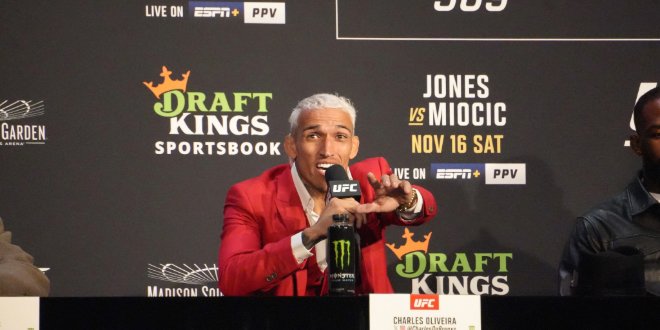
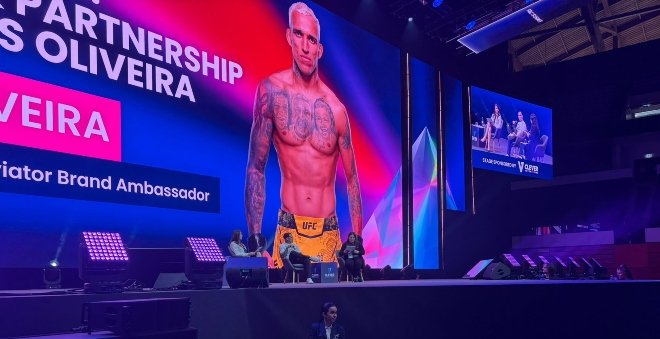
Charles Oliveira has entered the SBC Summit. The former Lightweight Champion of the World, current BMF belt holder, and one of the most iconic UFC fighters in recent memory is recounting his historic career as a mixed martial artist.
When questioned on whether his mindset has changed in the latter part of his career, he says: “Before I had a family, I was only fighting for myself. So this has massively changed. This is a sport where we take risks all the time, but I’ll take those and always give my best.”
On mindset, he adds: “I am a humble person, I follow God and I train. But I want to show everyone what I am and where I’m going to get to. Turning champion will always be my biggest pride.”
“If you have a dream, follow it. But don’t just sit there, chase it, work, all of you. Only when you have achieved that you can relax. Even then you can’t, because look at me – I want to continue making history, I want to continue my legacy and I want to share that with everyone like I am doing today.”
12:20pm: UFC legend Charles Oliveira takes to the stage
Reporting by Patrick Killeen
Former UFC lightweight world champion Charles Oliveira delivers the keynote address of day two.
12:15pm: Academia vs the industry
Reporting by Ted-Orme Claye
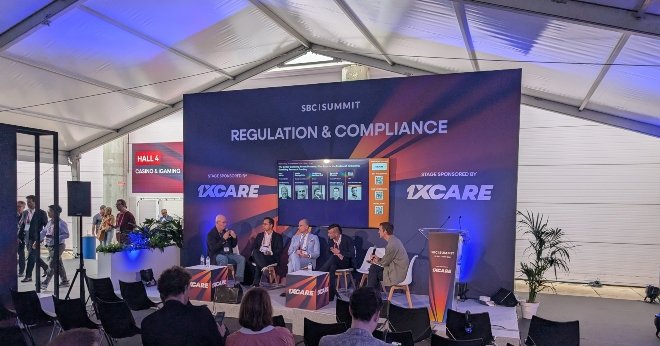
The industry needs to provide data and funding for research to help shape the public agenda and guarantee its own sustainability, says Paul Burns, Chief Executive Officer of the Canadian Gaming Association (CGA).
Gaming is subject to extensive research, whether by the industry itself to support lobbying efforts or to improve its own understanding of player protection. Burns notes that the CGA itself has funded research, but adds that “you can’t short-cirtcuit” the academic process.
“There has been a challenge in some parts of the world where academic priorities and industry priorities don’t meet,” he says. “When the priorities don’t meet ,we find that the industry is very eager to see good evidence-based research to help them get better at protecting players.”
12:00pm: managing future risks in Finland
Reporting by Ted Orme-Claye
You’d be forgiven for thinking that the Brazilian news had overshadowed everything at this year’s event, but not all the conversations are about markets coming to an end – there are a couple that are just beginning too.
Finland and Estonia, to be specific, are two Europe markets on a lot of people’s minds. Senir management at Finland’s regional operator Paf, tell SBC News that Finnish prospectors are keeping all options open to avoid the same fate as Brazil.
The industry needs to avoid political and publishing backlash, though Paf believes that some is inevitable once Finns become exposed to the huge amount of advertising that will come with next year’s regulation.
What will count is how it manages and responds to this backlash..
11:00am: Novibet set to improve sportsbook after successful summer
Reporting by Patrick Killeen
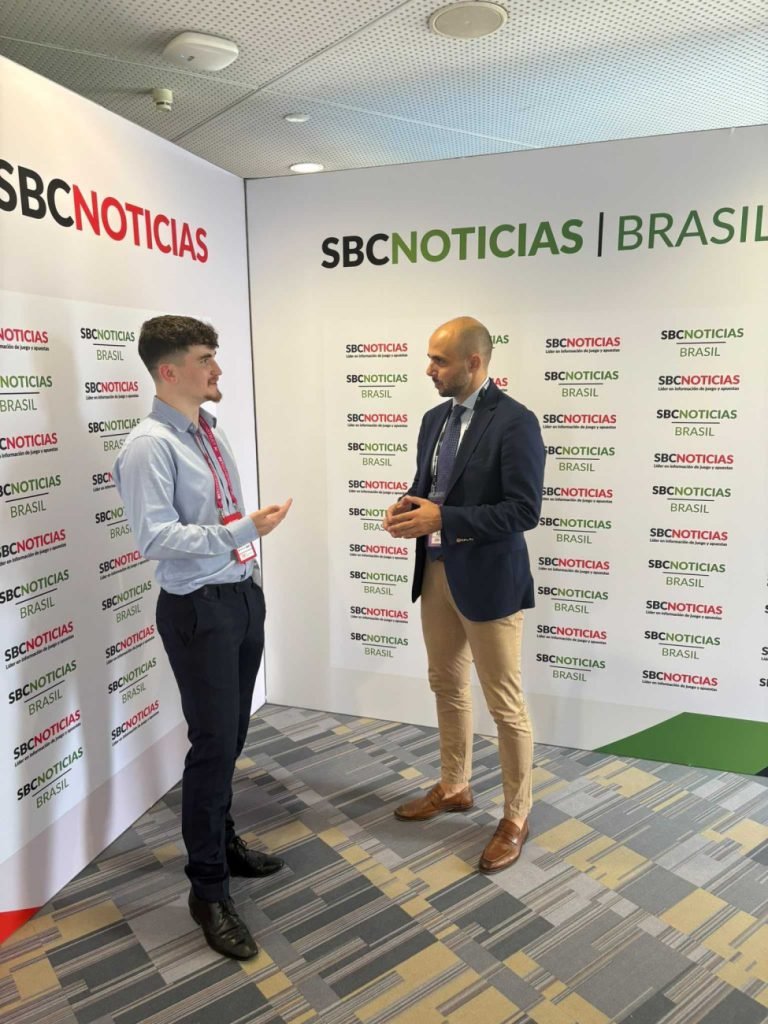
We are well underway on Day Two of the SBC Summit, and the SBC News team is straight into the important stuff already.
I spoke with Giannos Grivas, Executive Director of Sports at Novibet, on all things sportsbook, regulation and compliance in the interview room.
He gave us some intel that the Novibet sportsbook is set for some major product expansion in the next few months…
Giannos also spoke about how much growth the business has seen year-over-year due to how well Novibet optimised the World Cup – commonly cited as the biggest global sports event the world has ever seen.
We won’t reveal too much, but stay tuned for an in-depth write up with a C-suite figure who has nearly two decades of experience within the sector on what he thinks the future holds for sportsbooks.
10:30am: H2 views instant €4bn Brazil migration to Black Market
Reporting by Ted Menmuir
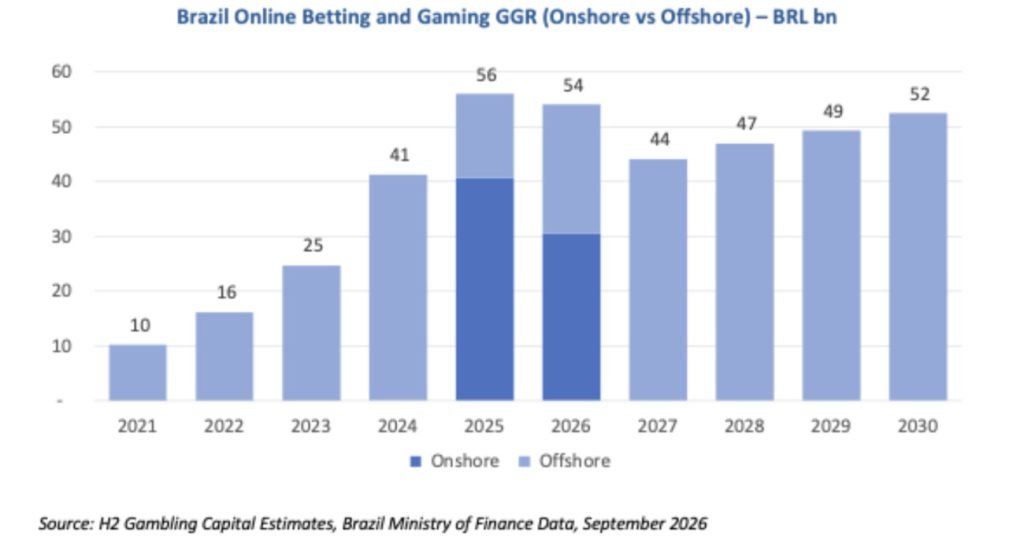
Breaking this morning, global gambling analyst H2 Gambling Capital has presented an initial forecast of Brazil’s market impacts following the immediate suspension imposed by President Luiz Inácio Lula da Silva.
H2 Gambling Capital estimates that approximately R$25bn (€4.2bn) in annual gambling expenditure could migrate from licensed platforms to the offshore market following the prohibition announced on 25 September.
An all-out suspension, dependent on a determination by Congress, would see Brazil’s online gambling black market increase from R$17bn (€2.9bn) to an estimated R$42bn (€7.1bn).
Dire consequences are identified by H2, as around “60% of expenditure previously captured by licensed operators will continue through unlicensed websites”.
Initial impact forecasts place offshore migration at R$20bn–R$30bn (€3.4bn–€5.1bn), equivalent to between half and three-quarters of the former legal market.
10am: No, you’re not seeing things – there’s a UFC star on the show floor
Good morning! Day two of the SBC Summit gets underway in Lisbon. The conference agenda kicks off at 11am today, with the Super Stage welcoming UFC star Charles Oliveira, while the other stages will host debates and discussions covering key markets like Italy, the Netherlands and Brazil.