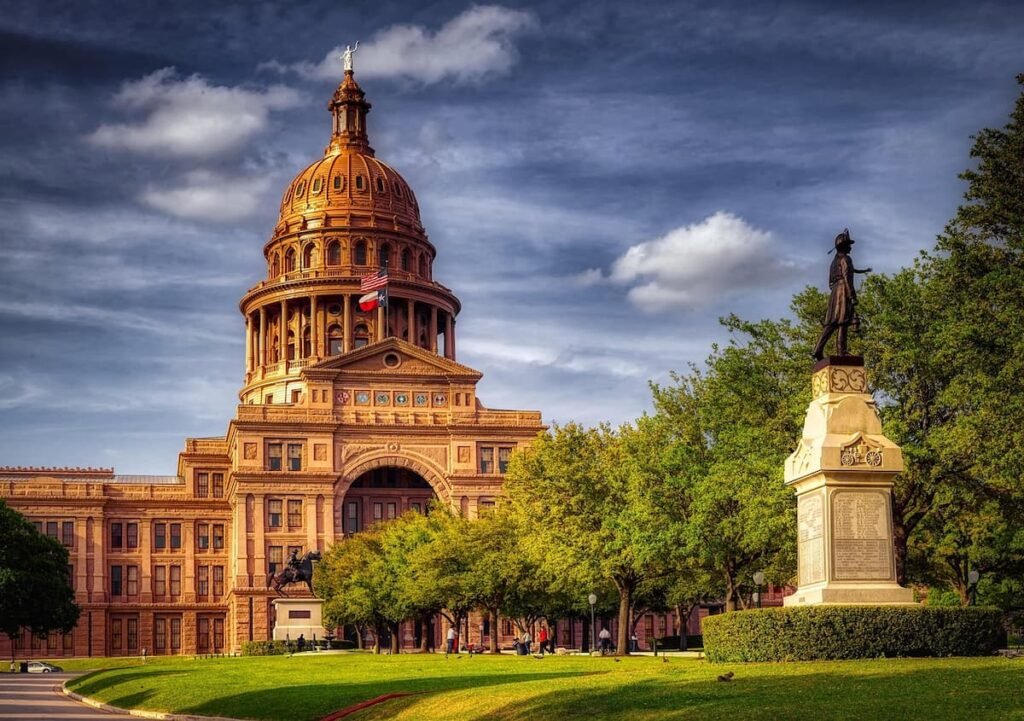
Texas signals potential action on prediction markets, as Lt. Gov. Dan Patrick frames them as a workaround to state gambling laws ahead of the 2027 session.
Texas Lt. Gov. Dan Patrick has included prediction markets as a priority for lawmakers to study ahead of the 2027 legislative session, signaling that one of the country’s most gambling-restrictive states is turning its attention to the sector.
In his interim charges list released on March 27, Patrick instructed the Senate State Affairs Committee to study:
The sudden inundation of prediction market gambling and the exploitation of federal law to circumvent Texas gambling prohibitions by allowing users to place bets on the outcome of elections and other events.”
The directive calls on lawmakers to examine “the relationship between federally regulated derivative markets and state-prohibited gambling.”
The charge concludes with a directive to “Make recommendations to ensure the integrity of Texas elections and Texas sports.”
No 2026 Session, But Policy Direction Set
Texas does not hold a regular legislative session in 2026. However, interim charges typically signal and help shape the agenda for the next session in 2027, offering an early indication of policy priorities.
Patrick’s inclusion of prediction markets places the issue alongside other politically sensitive topics, including election security and closing gambling loopholes, reinforcing how the products are being framed at the state level.
Texas’s Long-Standing Opposition to Gambling Expansion
Patrick’s move is consistent with Texas’s historically restrictive stance on gambling, particularly under his leadership.
In recent sessions, he has vowed that the Senate would not take up gambling expansion bills. Patrick is currently seeking a fourth term as chamber leader.
Texas is among a handful of U.S. states that have not legalized sports betting. Meanwhile, long-standing efforts to expand casino gaming have repeatedly stalled, even as Las Vegas Sands has poured millions into lobbying and backing politicians running for office.
Recently, the state has cracked down on unregulated or “gray-area” operations. Those include raids on social poker rooms and on illegal gaming parlors disguised as arcades that award non-cash merchandise.
Against that backdrop, prediction markets may face a similarly hostile policy environment, especially as they increasingly resemble traditional betting products.
By explicitly referencing the “exploitation of federal law,” Patrick’s interim charge suggests Texas lawmakers may pursue legislation to close that perceived gap. That’s either by redefining prediction markets under state law or by restricting access to certain types of contracts.
National Pressure Building, But Courts May Decide First
Texas joins a growing list of jurisdictions scrutinizing prediction markets. This year, more than a dozen states and federal lawmakers have introduced legislation targeting event-based contracts, particularly those tied to elections and sports.
However, legislatures might not determine the outcome. Ongoing litigation involving platforms such as Kalshi and Polymarket is already testing the boundary between federal derivatives regulation and state gambling oversight.
Key hearings are scheduled over the next month in multiple jurisdictions, including Arizona and Nevada. Courts could establish precedent on preemption and regulatory scope before Texas even reconvenes next year.
Many industry observers expect the oversight question to ultimately reach the U.S. Supreme Court.
The post Texas Lt. Gov. Dan Patrick Targets Prediction Markets in Interim Agenda appeared first on Gambling Insider.