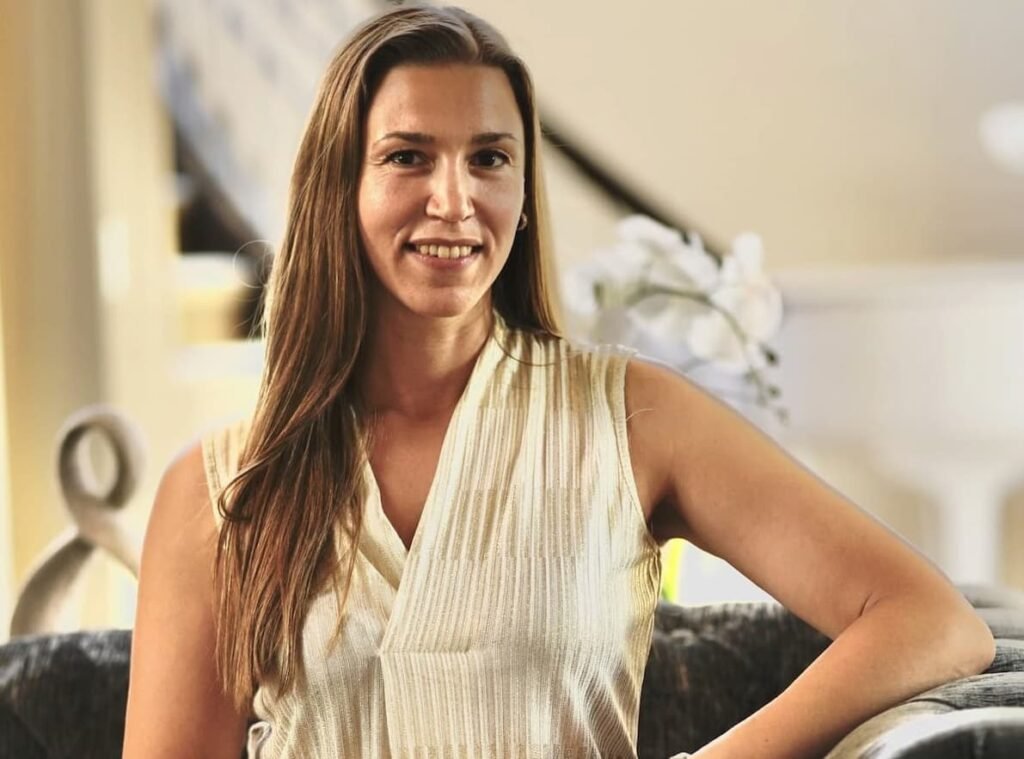
Eight years after the repeal of PASPA ignited a gold rush across state-by-state sports betting, former iGaming lobbyist and sports business executive Dr. Laila Mintas argues the US gambling industry built the wrong foundation.
As Founder and CEO of 365Prediction, Mintas is spearheading a bid to enter the prediction market “gold rush.”
Despite the legal challenges, Mintas told CasinoBeats in an interview this week that, “the market is big enough for everybody to get their decent piece of the action.”
“In sports betting, nobody ever quoted numbers as we see in the prediction market space. I think the last numbers I have seen quoted as a market size are $1 trillion, which is big enough for everybody,” Mintas added.
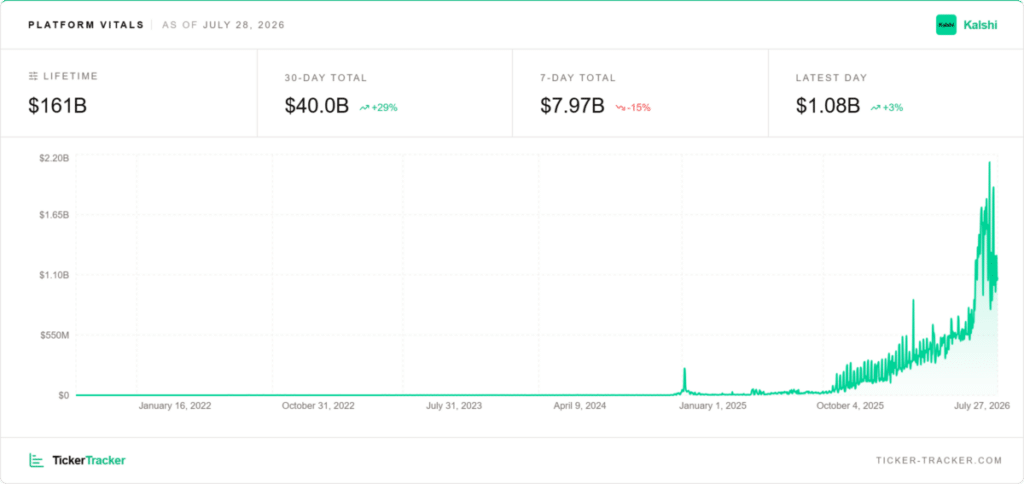
The World Cup saw prediction markets explode, with Kalshi reaching over $2 billion in daily volume. Annual trading volume is expected to reach trillions of dollars by 2030.
365Prediction Eyes Launch Date Early Next Year
The company is awaiting CFTC approval, but Mintas believes that it will come shortly. “You never know how long it takes exactly, but we’re pretty much at the end of the process, so we expect the license to be granted pretty soon,” she said.
With a license expected by the end of the year, 365Prediction is eyeing an early 2027 launch. It has applications to the CFTC for licensure as both a Designated Contract Maker (DCM) and a Designated Clearing Organization (DCO). While the DCM allows it to offer markets, the DCO license allows it to settle contracts without third parties.
Other operators have relied on established DCMs to enter the space. For example, DraftKings and FanDuel both partnered with already-licensed companies, although DraftKings has since launched its standalone platform. Underdog first partnered with Crypto.com, but has now launched its own platform as well.
“For me, it was very important that we not only have the DCM, but also the DCO sitting underneath the DCM,” says Mintas. “That vertical structure is very important. We will control not only the markets, but we will also be able to settle the markets and really control the technology, basically rails end-to-end, which is how you build something that is sustainable.”
Federally Approved Sports First Product
It will be a “sports-first product,” says Mintas, but the company also has a partnership with FiscalNote, who are the “leader when it comes to policies and political data. So, our number one will be sports, number two will be political markets, which are very interesting, and you see a lot of liquidity in those markets.”
Kalshi first rose to prominence through its 2024 election markets before adding sports last year. It’s these segments that have attracted the wrath of state regulators. Mintas has faith that the CFTC has the federal authority to oversee the industry.
“The DCM and DCO licenses are federal licenses, and they have been in place for a long, long time. That didn’t just happen overnight. So, the regulations have been in place, and nobody has ever argued that the CFTC is not responsible for regulating event contracts. And that’s what we’re doing. Sports event contracts or event contracts on politics or on other events like entertainment.”
Plenty have argued that the CFTC is not responsible for regulating sports event contracts. And a growing number of states are restricting sports markets on CFTC-licensed platforms. Washington could soon follow Nevada and Michigan in blocking Kalshi. New York might not be far behind.
State judges have generally ruled that sports event contracts are sports betting, but Mintas views them differently.
“The difference is structural. It’s not semantic. In sports betting, you’re playing against the house; the book sets the odds, takes the other side of the wager, and profits when you lose. There’s an inherent conflict of interest baked into the model,” says Mintas.
“A prediction market is an exchange. There’s no house. You’re trading a contract with other participants at the price the market discovers, and we simply operate the venue and clear the trade if you have your own DCO like us. So, the prediction market company doesn’t have the inherent conflict of interest that the bookmaker has. It has no skin in the game when it comes to the outcome of the event contract.”
She added, “No one ever seriously argued the CFTC shouldn’t regulate derivatives — that authority is settled, and event contracts fall under the swaps definition and sit squarely within it. What we’re seeing now isn’t a principled legal objection; it’s a commercial one. The moment these federally regulated contracts began to touch sports, the gaming industry reframed them as sports betting. But you don’t get to change the legal character of an instrument just because it started competing with you.”
Prediction Markets Can Bring Bettors Back on Shore
The legal backlash against prediction markets is commercially driven by casino groups, claims Mintas. Just as they lobbied against legal sports betting, they are fueling the fights against prediction markets.
Both prediction markets and casino groups have increased their lobbying efforts as the legal battles intensify. Mintas has experience in this sphere, having served as a lobbyist advocating for sports betting legalization.
She is also no stranger to legal battles. After the PASPA ruling paved the way for legal gambling, she served as CEO of PlayUp in the US. Her time at the company ended in 2021 as the sale of PlayUp to FTX collapsed. The company’s global CEO, Daniel Simic, blamed Mintas for sabotaging the $450 million deal and sued her for damages. Mintas blamed Simic and countersued for $100 million, which she claimed was the value of her stock if the sale to FTX had gone through.
Last year, a judge ruled in Mintas’s favor and dismissed PlayUp’s claims. Mintas’s claims survived Summary Judgement, and a trial is expected next year. Mintas said she could not comment on the case.
Drawing on her experience in sports betting, she is hopeful that prediction markets will create a better framework than the US’s flawed sports gambling system. She blames casino groups for the patchwork laws across the country.
“I remember that the local casino operators were mainly afraid that the legalized sports betting would cannibalize their casino business,” said Mintas. “And that’s why the sports betting laws in the US were written in the way that you see them being written today.”
“The state-by-state regulation was lobbied for from day one by the casino industry that wanted to protect their piece of the pie,” she added. “The US has spent the last 8 years building a state-by-state patchwork for sports betting, and it still leaves, as of today, roughly 70% of the activity offshore and unregulated.”
Prediction markets can bring offshore activity back to regulated platforms, says Mintas, particularly in states like California and Texas that have not regulated sports betting.
“Some of the US states never legalized sports betting, and now you see that those are fueling the offshore markets tremendously, and this is not good for the customer,” says Mintas. “It provides no transparency, it leads to match manipulations in sports, because you don’t know what’s going on, there’s no integrity at all.”
“Our conviction is the federal model, and we believe that one consistent national framework serves customers and integrity far better than 50 different ones,” she concluded.
Casino Gaming Not Off the Table
Ticker Tracker shows just how Kalshi has grown since it launched sports markets at the start of last year.
The next frontier could be casino gaming, but Kalshi has already said it has no intention of entering such markets. Mintas says it is too early to talk about it, but in general, 365Prediction would have no reservations if there were a legal framework. “For us, it is the highest priority to stay within the framework that the CFTC provides,” she said.
“If it falls under the asset class and is allowed by the CFTC, I wouldn’t exclude casino games per se,” Mintas said. “We have to see what the legal situation looks like when we go live. You probably saw a few months ago that Kalshi issued a big press release saying they would never offer those casino games. But we have to see how the market develops in that direction. I’m not aware that anyone has tried to legalize that yet or filed or self-certified anything in that direction in the US.”
There have been no filings to launch casino gaming, although Betr COO Alex Ursa demonstrated that a slot-like interface can be built on Kalshi. Ursa built it seemingly as an experiment rather than a product to launch on Betr’s platform. Kalshi distanced itself from it and banned Ursa, saying his slot creation violated their terms and conditions.
Mintas added, “We stand for innovation, so we want to innovate, and we want to disrupt the market. We don’t want to copy and paste what’s already out there. That being said, we have to see what’s legally possible, what’s not legally possible; we will not touch.”
The company will reveal more details as it nears its launch date.
The post Event Contract Market Big Enough for Everyone, Says Laila Mintas as 365Prediction Eyes Launch appeared first on CasinoBeats.