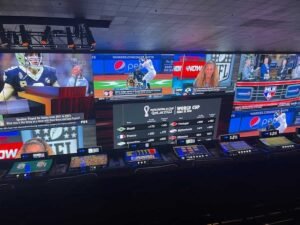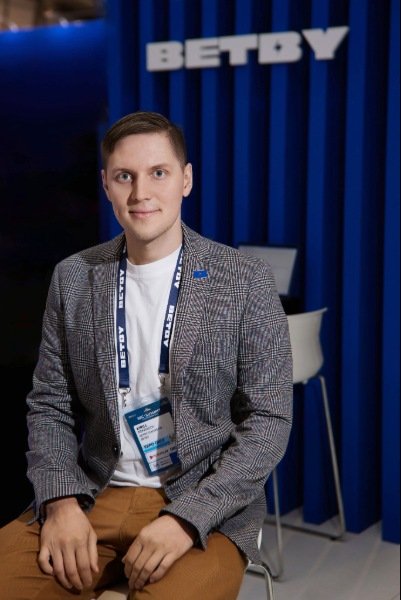
BETBY’s esports feed, Betby Games, played a key role in the supplier’s World Cup offering, giving operators a 24/7 stream of fast-paced football content throughout the tournament.
At the centre of that proposition was eWorld Cup, an engine-led competition replicating the national teams, players and wider narrative of the real tournament, with each match taking only a few minutes.
The tournament provided BETBY with an opportunity to analyse how esports performed alongside one of the world’s biggest sporting events, both during live matches and in the hours between them.
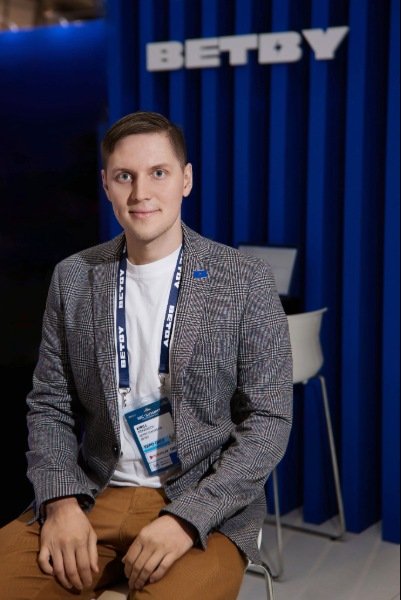
SBC News spoke with Kirill Nekrasov, Head of Innovation and R&D at BETBY, about how players responded to eWorld Cup, what the data revealed about Betby Games’ contribution to operators’ World Cup activity, and how esports can help extend engagement around major events.
Most suppliers would expect activity to rise during a World Cup. What did the data tell you about the role Betby Games played alongside the real tournament?
For me, the clearest number is that 16% of all bets placed during the World Cup came through Betby Games. In other words, that is almost one in every six bets. On top of that, the feed also reached 14% of players and generated 11% of GGR, so it was a meaningful part of the overall sportsbook activity we saw during the tournament.
We also saw strong growth compared with the equivalent pre-tournament period. Betby Games had 29% more players, while turnover and GGR both increased by 21%.
But the off-hours data was probably even more interesting. That is because when no World Cup match was live, Betby Games GGR was 35% higher, with turnover up 25%.
For me, that really shows the opportunity between fixtures. Players are still following the tournament and thinking about football even when there is no live match, so if operators have the right content available, those quieter hours can still generate a lot of activity.
You mentioned the opportunity between fixtures. Was that the main role eWorld Cup was designed to play during the tournament?
Yes, absolutely.
When we were preparing for the World Cup, we looked at the schedule very closely from an operator’s point of view. Where are the main peaks? Where are the longer gaps? What happens late at night in Europe? What do you offer a player once one match ends and the next one is still a few hours away?
That is where the eWorld Cup became very useful. The matches took only a few minutes, they ran continuously, and the player was still interacting with national teams and a tournament environment closely connected to the real World Cup.
The data also showed that players were using it more actively during those quieter periods. For example, when no real World Cup match was live, eWorld Cup users averaged nine bets per player, compared with seven while the real tournament was live. Apart from that, average stake was also €12.13 compared with €9.22.
So we are talking about roughly 29% higher betting frequency and 32% higher average stake during off-hours. For me, that is a strong indication that the eWorld Cup was filling a very specific gap in the betting journey.
Why do you think engagement with eWorld Cup was stronger when the real tournament was not live?
I think a lot of it comes down to attention and pace.
During a major World Cup match, players already have plenty to focus on. They are watching the game, following live odds, checking statistics and reacting to what is happening on the pitch. There is already a very rich betting experience in front of them.
Between matches, the football interest is still there, but there is much less happening. That creates more space for a faster format like eWorld Cup.
The pace of the product is important as well. Once one eWorld Cup match finishes, the next one is about to start. This means players do not have to wait long for another betting opportunity, which creates a very different rhythm from traditional football.
For operators, that can be extremely valuable during a tournament like the World Cup because you already have the audience’s attention. The challenge is keeping that attention active for longer, and that is where additional relevant content can make a real difference.
The data also shows that players who engaged with both the real World Cup and eWorld Cup were much more active. What did you take from that?
The first thing is that we have to interpret that carefully.
Players who engaged with both averaged 22 bets during the tournament, compared with nine among those who only bet on the real World Cup. That is a 144% difference in betting frequency.
I would not say that the eWorld Cup itself caused those players to bet 144% more, because more active users are naturally more likely to explore different products. But it does show that the eWorld Cup was relevant to a highly engaged part of the audience.
What I find even more interesting is the repeat behaviour. Among the players who crossed into the eWorld Cup, 41% came back and placed another eWorld Cup bet on a different day.
That is a very useful signal for us because it shows the product was able to generate repeat engagement. Players were not simply trying it once during the tournament and moving on.
Overall, the eWorld Cup reached 10% of Betby Games players during the World Cup, so it became a meaningful part of the broader experience we were offering our partners.
Did the real tournament also influence what players were interested in betting on within the eWorld Cup?
Yes, and this was one of the more interesting findings from the analysis.
We saw eWorld Cup activity around certain national teams increase on days when those same teams were playing in the real World Cup. Portugal-related activity, for example, was 16% higher on Portugal match days. Norway increased by 18%, Egypt by 11% and Colombia by 10%.
That gives operators something very practical to work with.
If Portugal is playing later that day, you already know that interest around Portugal is going to be higher. Players are reading team news, discussing the match and checking markets well before kick-off. There is already attention around that team, so the operator can support it with additional relevant content throughout the day.
For me, that is a very good example of how the real tournament and the eWorld Cup can work together. You are using the same football interest and the same teams, but giving players a faster format with much higher event frequency.
Looking back at the tournament as a whole, what is the main lesson for operators?
I think the biggest lesson is that the value of a major tournament goes well beyond the live fixtures.
The matches will always create the biggest peaks, of course, but there are many hours around those peaks where players are still highly engaged with the sport. The data we saw during the World Cup showed that those hours can be commercially important as well.
Betby Games accounted for a meaningful share of total sportsbook activity during the tournament, while eWorld Cup helped our partners keep football content running during periods when the real schedule was quieter.
For operators, that means looking at the full tournament day rather than only the match windows. If you know where player attention is going to be and you have the right content ready around it, you can extend engagement much further than the final whistle.