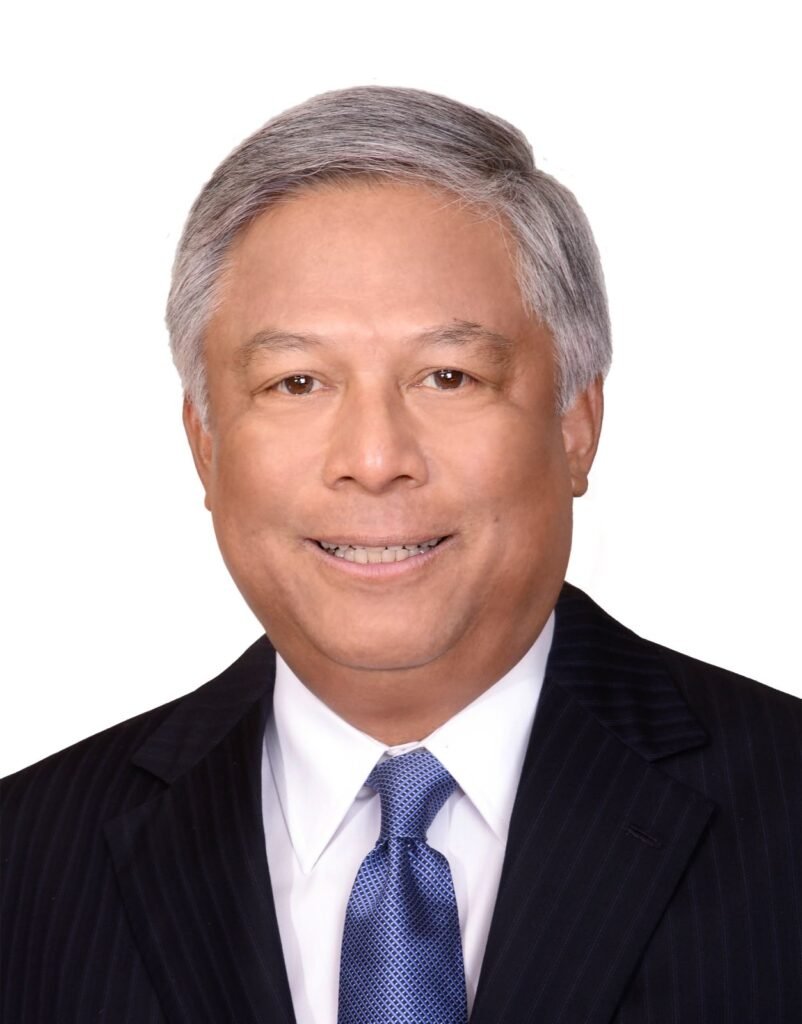
During his career in construction, Alejandro Tengco never imagined he’d oversee building a top five global gaming market. On Tengco’s watch as chairman and chief executive officer of gaming regulator Philippine Amusement and Gaming Corporation (Pagcor), gross gaming revenue reached a record 396 billion Philippine pesos (PHP; US$6.4 billion) last year from PHP 214 billion in 2022, a 23% compound annual growth rate juiced by Asia’s first legal domestic online gaming market ramping up alongside billion-dollar integrated resorts.
In an exclusive interview, Tengco tells iGB he aims to complete three more pillars of his legacy before his term ends on June 30, 2028 coterminous with the six year presidency of Ferdinand “Bongbong” Marcos Jr.
Over the next 25 months, Tengco, in his mid-60s, aims to “decouple” Pagcor’s gaming operations from its regulatory functions, win legislative approval for a comprehensive online gaming law and move the government owned corporation into its own headquarters building, currently under development.
Tengco, who took office in August 2022, hopes to achieve these goals amid the latest tumultuous turn of a turbulent tenure that’s transformed Philippine gaming. GGR fell 16% year on year in the first quarter of 2026 to PHP87.6 billion.
Phantasy Land
“You license the integrated resorts, then the pandemic comes. You dig in. You dig deeper. Then you have the revenge economy after the pandemic. Oh my God, my first three and a half years, you were riding the best roller coaster in Disneyland. It was fast, and it was exciting. Now you wake up, there’s a war between the US and Iran.”
Online gaming revenue took the biggest hit in Q1, down 23% year on year to PH36.3 billion. “The main market for the online gaming industry is the class C and the higher D, that is your core market,” Tengco says, specifying public transit drivers and conductors, cargo and food delivery personnel, all hit hard by increased fuel costs, plus market vendors and their customers. “So that means a group of your clients will either completely not play or will reduce the amount that they play.”
Even before the attack on Iran, Philippine gaming revenue had paused its vertiginous rise. Land based gaming faces challenges as tourist arrivals remains substantially below pre-Covid levels, economic growth slows and igaming beckons, though Tengco contends the land based and online markets are “complimentary, not competitive.”
POGO no-go
Tengco cites termination of Philippine Overseas Gaming Operator (POGO) activities from the end of 2024 as having major impact land based casino revenue. He acknowledges POGOs had to go due to alleged criminal activity in the Philippines and diplomatic tensions with China, target market for the vast majority of POGOs.
Before President Marcos announced the POGO ban in July 2024, Tengco estimates 350,000 POGO workers were in the Philippines, most of them participating in gaming in their leisure time. “Even if they only visited a casino once a month, that’s more than 1,000 players every night. It was a business driver.”
Despite record GGR, Pagcor’s 2025 revenue fell due to loss of POGO licensing fees and shrinking land-based revenue, especially at its own Casino Filipino operations. Tengco concedes Pagcor’s income could fall again in 2026.
Pagcor’s decade-long goal of divesting Casino Filipino may help stem the revenue decline, according to Tengco. “In our current setup, Pagcor is both a regulator and an operator. Nowhere else in the world do you find that setup.” With decoupling, “The dual role would be split, and Pagcor would have only regulatory functions.”
This house isn’t winning
Many Casino Filipino branches have simply closed. Most of Pagcor’s 38 remaining gaming operations – all in leased premises – continue to “bleed” money, Tengco says, due to mandates requiring 70% of GGR to be “given away” to various public agencies. Privatized Casino Filipino outlets would relieved of those obligations, instead liable only for license fees to Pagcor, currently around 25% of GGR, and any applicable business taxes.
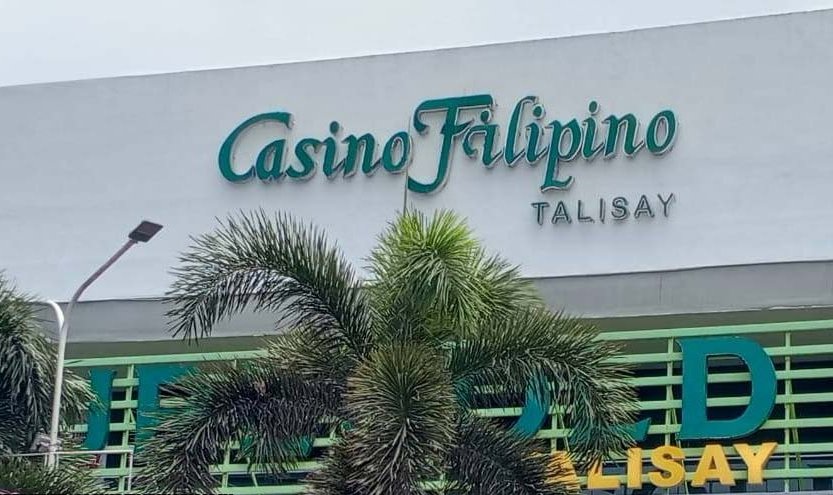
Tengco believes privatized Casino Filipino properties have potential to prosper as “community casinos because they are smaller in scale compared to integrated resorts [and] have a good business model.” He contends social stigma associated with gaming has largely dissipated. “Nowadays, people want to find time to enjoy life, to relax. Part of that is eating out and trying your luck on the slot machines. It has become part and parcel of one’s activities, whether it’s once a month, once a week, or twice a week.”
Tengco says further action on decoupling awaits evaluation by the Governance Commission for Government Owned or Controlled Corporations (GCG). He hopes for a GCG decision in the coming weeks that will allow privatization to proceed by the end of the year.
‘Leaner, meaner Pagcor’
Privatization would substantially reduce Pagcor’s headcount from the current 8,000, mostly Casino Filipino staff. “We will give them a good retirement package. All those who have been involuntarily retired will get a special incentive package in addition to the already generous retirement package.”
Tengco points out that his administration has enabled “fellow Pagcorians” to bring grievances to the national Civil Service Commission. That follows Tengco recognizing labor union Pagcor Employees Association (PAGCEA) as the official representative of Pagcor workers last September.
“It’s a very nice relationship [with PAGCEA], to the surprise of many,” Tengco says. “This just shows that I’m committed to employees’ welfare.”
When decoupling is complete, “It will a be leaner, meaner Pagcor.”
Online derailed
Some in the Philippine online gaming industry suggest Pagcor is already mean, even though it has slashed igaming tax rates from 55% to 30% under Tengco. Showing sharper regulatory teeth while laying the groundwork for comprehensive online gaming legislation may help Pagcor convince lawmakers, many concerned about social impacts of online gaming, to codify rather than cancel the lucrative sector. However, operators claim new Pagcor rules and practices crimp revenue.
Pagcor’s actions follow last August’s Bangko Sentral ng Pilipinas (BSP; Philippine Central Bank) order that payment platform apps remove in-app links to igaming sites. After rocketing to PHP59.3 billion in Q2 2025 before in-app delinking, online gaming revenue fell to PHP41.9 billion in Q3, with the BSP order taking effect halfway through the quarter, then PHP36.8 billion in Q4 and PH36.3 billion in Q1 this year. Online gaming revenue exceeded land based revenue for the first three quarters of 2025 but that’s flipped back in the two most recent quarters.
“We are now in constant dialogue with BSP, as we try to explain to them the position that the linking should happen again. That is my primary goal,” Tengco says. “I am trying to show to the regulator that certain AI powered tools are already being used so that we can control the use of these apps, and that means KYC [know your customer] is tighter and stronger. For me, that eliminates one big problem, those below 21 [playing], with a strong KYC.”
More fees, less marketing
Online operators say new Pagcor rules add insult to BSP injury. Pagcor has limited igaming marketing, restricting TV advertising, eliminating billboards and limiting other outdoor advertising in the name of responsible gaming. It recently limited player rebates.
From June 1, Pagcor will require a minimum guaranteed fee of PHP9 million monthly, based on revenue of PHP30 million at the 30% tax rate, for operators with online casino games and a PHP3 million MGF based on revenue of PHP 15 million for operators without online casino games, such as sports betting sites. From January 1, MGF rises to PHP10.5 million and P4 million respectively.
Although Pagcor delayed MGF implementation due to Iran war fallout, some longstanding igaming names are reportedly considering closing their Philippine platforms.
“I think I’ve given them enough time to be able to start up, to be able to do whatever they can do to make their businesses grow,” Tengco responds. “At the same time, it gives you the opportunity to weed those that are not deserving to be there, because there are so many others who would want to have a license.”
Pagcor is limited to 70 online licensees and has 63 active licensees at last report. Tengco says 80% of online gaming fees are generated by 40% of operators.
Most wanted content
On the supplier side, Pagcor has begun licensing overseas online game providers. According to a top Philippine igaming operator, some popular game creators resist licensing, fearing it will stop them from supplying the unlicensed gray market where they currently earn more. Unavailability of popular games on licensed sites can drive players to unlicensed sites.
Tengco denies that licensing will keep away most wanted content. “I’m now in very heavy discussions with big time international companies that supply games to GSAs [gaming system administrators, Pagcor’s term for igaming platform operators] worldwide. They were doing this illegally before, but now they are ready to surrender themselves to Pagcor.”
Due to ongoing negotiation and application processes, Tengco says, “I will not give the names today. But, mark my words, you will be surprised.” When the licensing process is complete, “That will choke the gray market.”
Additionally, “Pagcor will not issue you a permit to hold any international or local exhibition or conference related to gaming if you are sponsored even by one illegal operator.”
iGaming market intelligence platform Blask estimates licensed operators are capturing less than 40% of total Philippine online gaming demand, while noting licensed market share has nearly doubled over the past year.
Even playing field
Tengco disputes criticism that regulating licensed online operators benefits unlicensed rivals.
“Number one: restrictions on marketing were mainly focused on outdoors and [public transportation] vehicles. I don’t think the illegal online operators will have an advantage because they can’t advertise also. Number two: no advertisements during peak hours. It’s only during one portion of the day, 5pm to 8pm. That is the time when families are together having dinner, talking about what happened at work or in school. The illegals are not allowed to do the same. So the last avenue where they will be fighting for exposure will be the different applications, social media. There the match is even again.”
Tengco says unlicensed operators are cited in the majority of consumer complaints Pagcor receives. “Now that people are getting more conscious about responsible gaming, in the long run, I think people will will realize that if I will play, they might as well play in Pagcorp-licensed casinos because there is clearly player protection. There is a place where I can report the irregularities… So people, believe me, are slowly realizing [and] that means moving towards us.”
Overall, Tengco says comprehensive online gaming legislation will bring greater certainty to the sector. “We will able to strengthen the industry further, and the industry will be more stable. There is a structure, there is a law, so it will not easily be scrapped.”
Home at last
Tengco is building a different structure, a US$40 million Pagcor headquarters scheduled for completion in early 2028. “After 45 years, Pagcor will have its own corporate center.” Tengco finds Pagcor’s lifetime in leased spaces ironic given the billions it has contributed to the public purse.
The project features a 40,000 square meter (430,000 square foot) office building where Pagcor will consolidate corporate employees. Rental revenue from leasing retail and unoccupied office space will cover building maintenance and other expenses, Tengco says.

Philippine conglomerate San Miguel Corporation, which leased Pagcor the site for 25 years, is handling construction. The 15 hectare (37 acre) plot is located between Pagcor’s Entertainment City integrated resort cluster and Manila’s first IR, Newport World Resort, adjacent to Ninoy Aquino International Airport. San Miguel, part of the airport operating consortium, will lease back 13 hectares for aviation use.
If Tengco moves decoupled, regulator-only Pagcor into those offices to oversee a national igaming law before June 30, 2028, his legacy will cast a shadow far longer than that new headquarters.
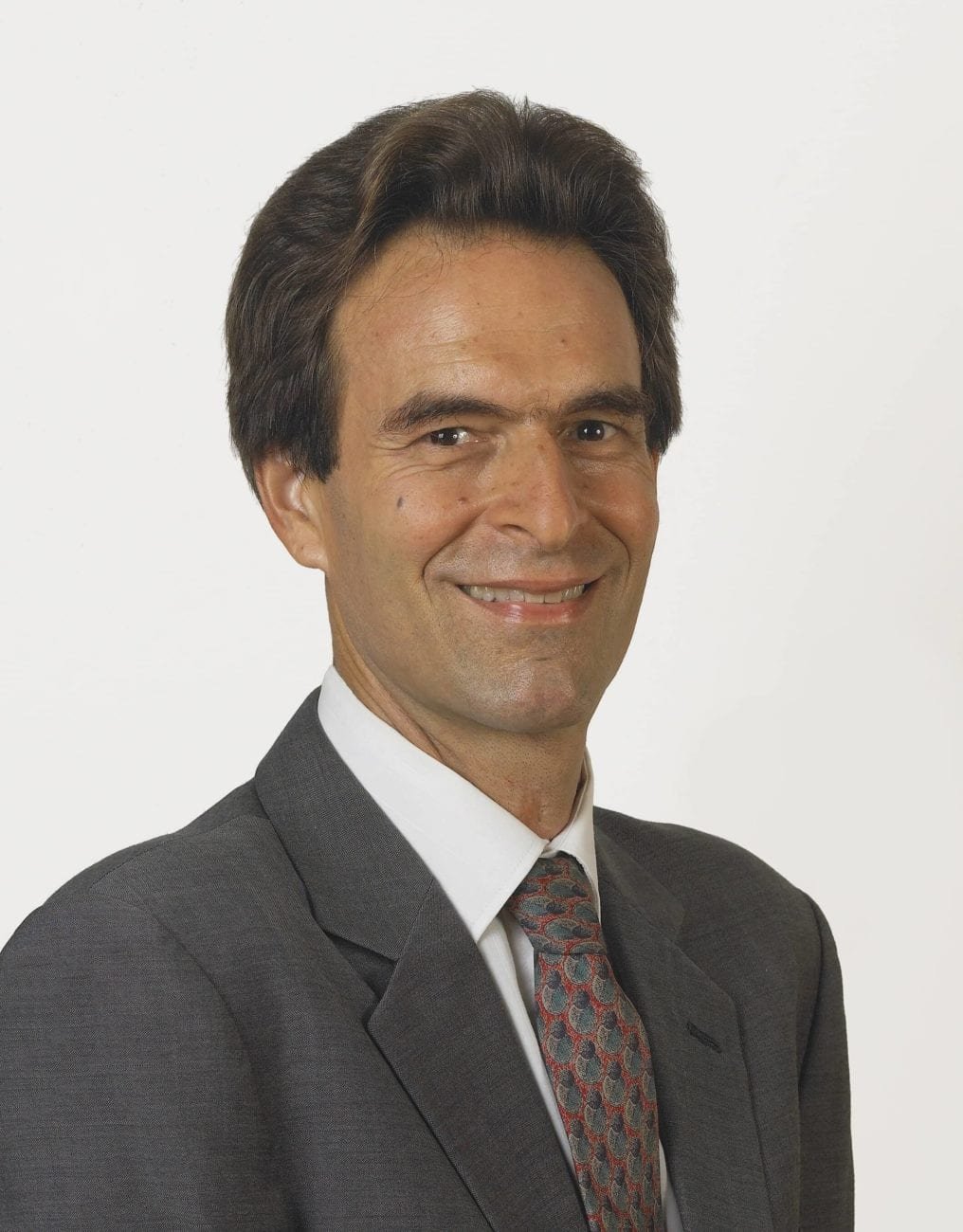
Muhammad Cohen is a former US diplomat and current iGB Asia editor at large. He has covered the casino business in Asia since 2006, most recently for Forbes, and wrote Hong Kong On Air, a novel set during the 1997 handover about TV news, love, betrayal, high finance and cheap lingerie.