U.S.-based international casino operator Las Vegas Sands Corp has no plans to enter the regulated online gaming market, even through the licensing of its brands. The group is, however, tapping into artificial intelligence (AI) and other technology-powered tools to boost its business analytics.
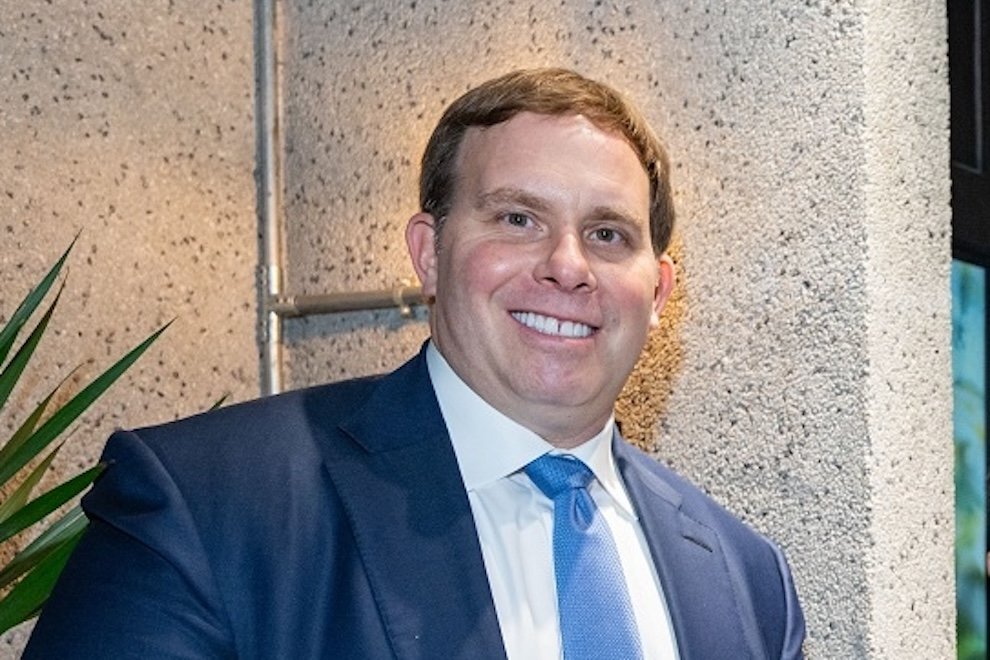
That is according to Patrick Dumont (pictured in a file photo), the firm’s chairman and chief executive.
Online gaming “is not something that we intend to pursue,” he said on Thursday during the Bernstein 42nd Annual Strategic Decisions Conference, held in New York in the United States.
Las Vegas Sands is the parent company of Macau-based casino operator Sands China Ltd. The parent company also controls the Marina Bay Sands casino complex, one half of Singapore’s casino duopoly.
“We are very focused on doing the things that we’re market leaders in,” Mr Dumont said, referring to the company’s strong position in the Macau and Singapore markets.
He added: “We believe that we have a very strong argument to be made where, if there’s a new jurisdiction that wants to bring integrated resorts, we’re someone that should be on the call list… We feel like that’s what we’re really good at and that’s what we’re going stick to.”
“I don’t think we’re going look to pursue things that are not in our core.”
The Las Vegas Sands CEO also addressed the emerging prediction markets sector, noting that doubts remained regarding the legality of how these platforms operate.
“But it’s interesting to watch and observe because it’s tangential to our industry.”
Where Las Vegas Sands sees an opportunity, according to the executive, is in the growing adoption of AI-powered technologies within its operations.
AI “is something that we look at a lot,” he said. Mr Dumont noted that, on one hand, the technology could increase the speed and efficiency of proprietary tools developed by casino operators.
“There’s a lot of that in our industry. There’s a lot of proprietary development that goes into what we do,” he noted.
Another area he highlighted was the potential for AI to make staff “more efficient”.
“But I think the biggest opportunity for us is business intelligence,” Mr Dumont said.
In that field, Mr Dumont discussed the growing importance of smart gaming tables for the Las Vegas Sands group, labelling the investment “very successful”. Nonetheless, he noted that the technology is still in its “early days” in terms of how efficient it can make operations, while also increasing security and improving the patron experience.
“We started investing in smart tables more than eight years ago. The solution that we run is a little bit different from some of the other solutions that other operators run,” Mr Dumont said.
“The key for us is really a combination of RFID and optical. That allows us to really be precise about the way that we understand what’s happening at the table. The goal was really to get analytics to the point where it was almost as good as it was on the slot side. It allows us to really understand what’s happening in a much better way.”
‘Missing capacity in premium’
Discussing Sands China’s performance, Mr Dumont explained that the firm was working on introducing products that “are more able to address the demand of higher-value patrons, because we’re missing capacity in the premium segment, particularly in the most premium areas”.
He added that the firm was also implementing measures to optimise operations in both the premium mass and base mass segments.
The Las Vegas Sands group announced in April that it was working on refreshing its hotel room product at The Venetian Macao and creating additional luxury suite offerings.
Mr Dumont stressed that Macau was “a product-driven market” – “you have to build things that enable customers to show up and feel like they get great experiences and therefore spend”.
“I always joke with people, saying that before the Venetian [Macao] was built, gross gaming revenue on Cotai was zero.”
Sands China reported net income of US$294 million for the first three months of 2026, compared with US$202 million a year earlier. The firm’s adjusted property earnings before interest, taxation, depreciation and amortisation (EBITDA) stood at US$633 million for the three months to March 31, up from US$535 million in the prior-year period.
In his remarks, Mr Dumont also discussed Las Vegas Sands’ potential interest in entering new markets. He again highlighted interest in Texas in the United States and Thailand, but noted that neither market had yet moved to legalise casino gambling.
Discussing the Middle East market, where rival casino operator Wynn Resorts Ltd is poised to open its Wynn Al Marjan Island project in the United Arab Emirates (UAE) sometime next year, Mr Dumont said he hoped the new market would prove successful.
“I’m familiar with the Middle East… I’m a big fan of what they’re doing from a hospitality standpoint. I think they have great investments there,” he said.
“Gaming is new there. We’re watching and waiting. It’s great for our industry if they’re very successful, because I think our industry needs to experience some growth and needs to have new markets.”